
As a self-proclaimed master of procrastination, I've spent years cycling through the same predictable pattern: promising myself I'll study, getting distracted by the endless rabbit holes of the internet, and then frantically cramming at the last minute. I've tried every productivity hack, app, and method under the sun, but nothing truly broke the cycle—until I discovered FlashySurf. In 2026, this isn't just another Chrome extension; it's a behavioral intervention disguised as a study tool, and it has fundamentally changed how I approach learning during my most unproductive moments.
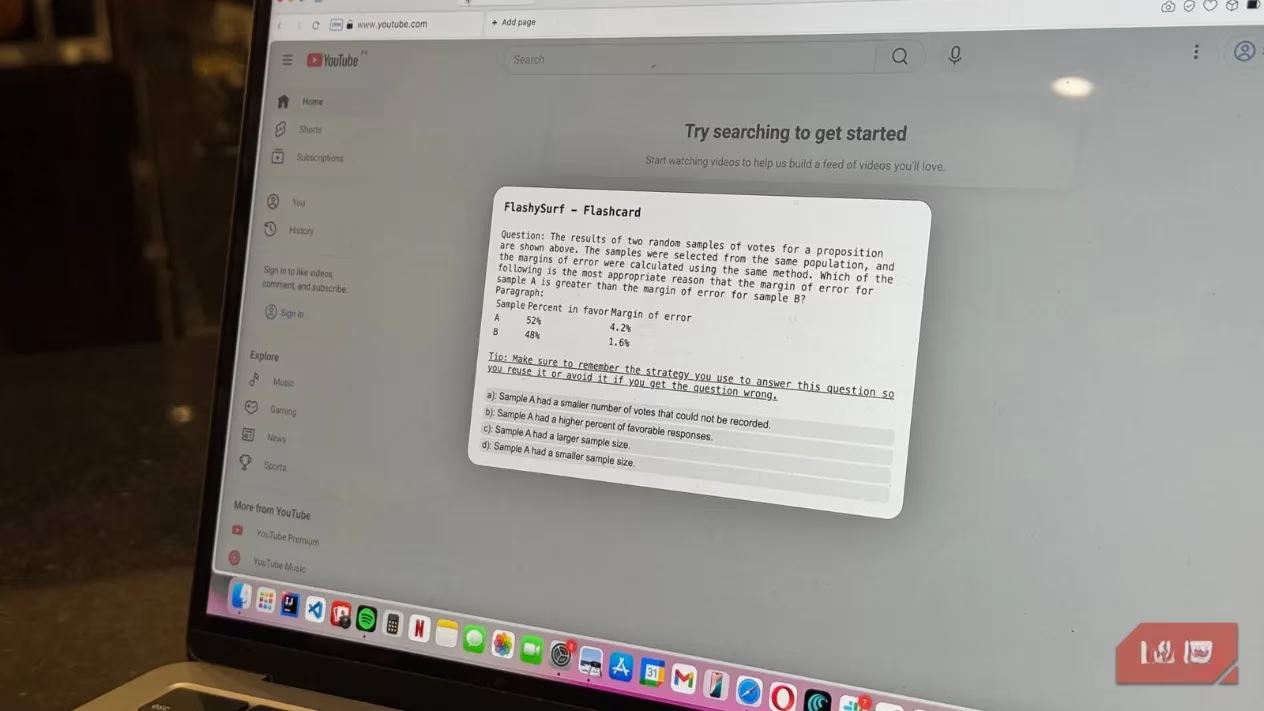
🚫 No Escape from Learning
The core genius of FlashySurf lies in its inescapable design. When I first read about flashcards randomly appearing during my browsing sessions, my immediate thought was, "I'll just close them." The developer, however, is a fellow procrastinator who clearly understood this impulse. The extension employs a brilliant, almost mischievous, lock-in mechanism:
-
Zero Close Buttons: Once a flashcard pop-up appears, there is literally no 'X' to click. You cannot dismiss it.
-
Mandatory Engagement: You must interact with the question. If you get it wrong, you're not simply shown the answer. The interface transforms.
-
Forced Reflection: After an incorrect answer, a "Next: Take Notes" button appears. Here's the kicker—you must type a minimum of 10 words explaining why you were wrong and what the correct solution is. This isn't optional; the pop-up won't close until you do.
-
Even Success Has a Cost: When you answer correctly, you still must spend 5 seconds reading the detailed explanation before you can return to your cat videos or social media scroll.
This design forces a level of accountability I've never encountered in other study tools like Quizlet or Anki. It turns passive, lazy procrastination into active, albeit reluctant, learning.
✨ Customization and AI-Powered Creation
Initially launched with a pre-built SAT question bank, FlashySurf has evolved dramatically. The ability to create custom flashcard sets has transformed it from a niche test-prep tool into a universal learning companion.
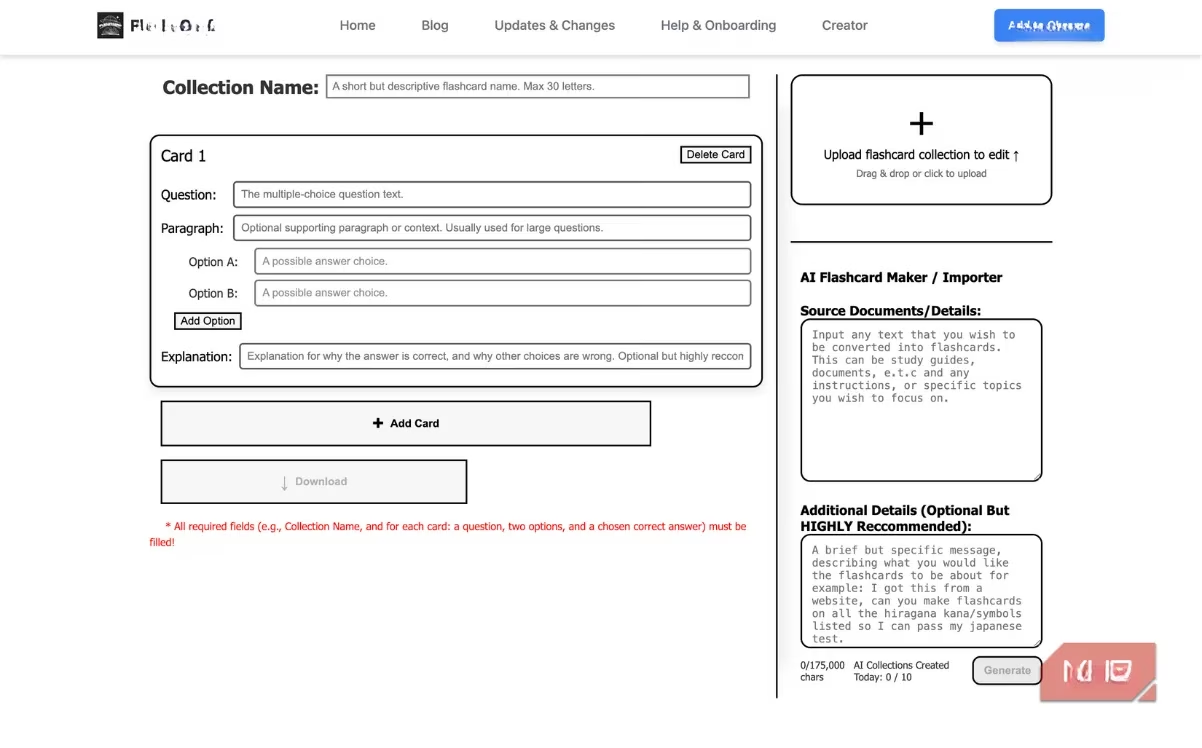
Accessing the settings panel via the extension icon reveals a powerful suite of creation tools:
| Creation Method | How It Works | Best For |
|---|---|---|
| Manual Creation | Directly type questions, multiple-choice options, and detailed explanations for each answer. | Precise control, complex topics, legal/medical terminology. |
| AI Flashcard Maker | Paste any text (article, textbook page, notes). The AI analyzes it and generates Q&A pairs. You can add focus prompts (e.g., "focus on historical dates") for better accuracy. | Quickly converting long-form content into study material, brainstorming question angles. |
| Import Function (In Development) | The interface suggests you can upload .csv or .json files from other apps. |
Migrating existing decks from tools like Quizlet or Brainscape. |
⚠️ A Quick Note on Imports: As of 2026, this feature is still a work in progress. In my testing, the upload process claimed success but didn't populate my collection. The developer has acknowledged this and is actively refining it.
🧠 The Science Behind the Interruption
What makes FlashySurf more than just a nagging pop-up is its sophisticated backend, built on established cognitive science principles. The Reddit post from the developer outlined a multi-faceted system:
-
Spaced Repetition System (SRS): The extension tracks your performance and schedules reviews. Cards you know well appear less frequently, while troublesome cards are shown more often, optimizing memory retention.
-
Weakness Detection & Semantic Clustering: This is the secret sauce for the built-in SAT deck. The AI doesn't just see questions as isolated items. It groups them by underlying concept or topic (e.g., "algebraic functions," "rhetorical analysis").
-
Intelligent Question Selection: Your study session is dynamically composed:
-
50% New Questions: To introduce fresh material.
-
35% Similar to Failed Questions: To reinforce weak areas by testing the same concept in a slightly different way.
-
15% Direct Reviews of Failed Questions: For brute-force memorization of past mistakes.
-
🔥 The Future is Custom: Currently, the advanced semantic clustering is exclusive to the SAT collection. However, the developer has publicly confirmed that expanding this AI-powered topic modeling to user-created custom decks is a top priority for 2026. This will be a game-changer for students studying complex subjects like medicine, law, or programming.
💭 My Verdict: Annoyance Turned Appreciation
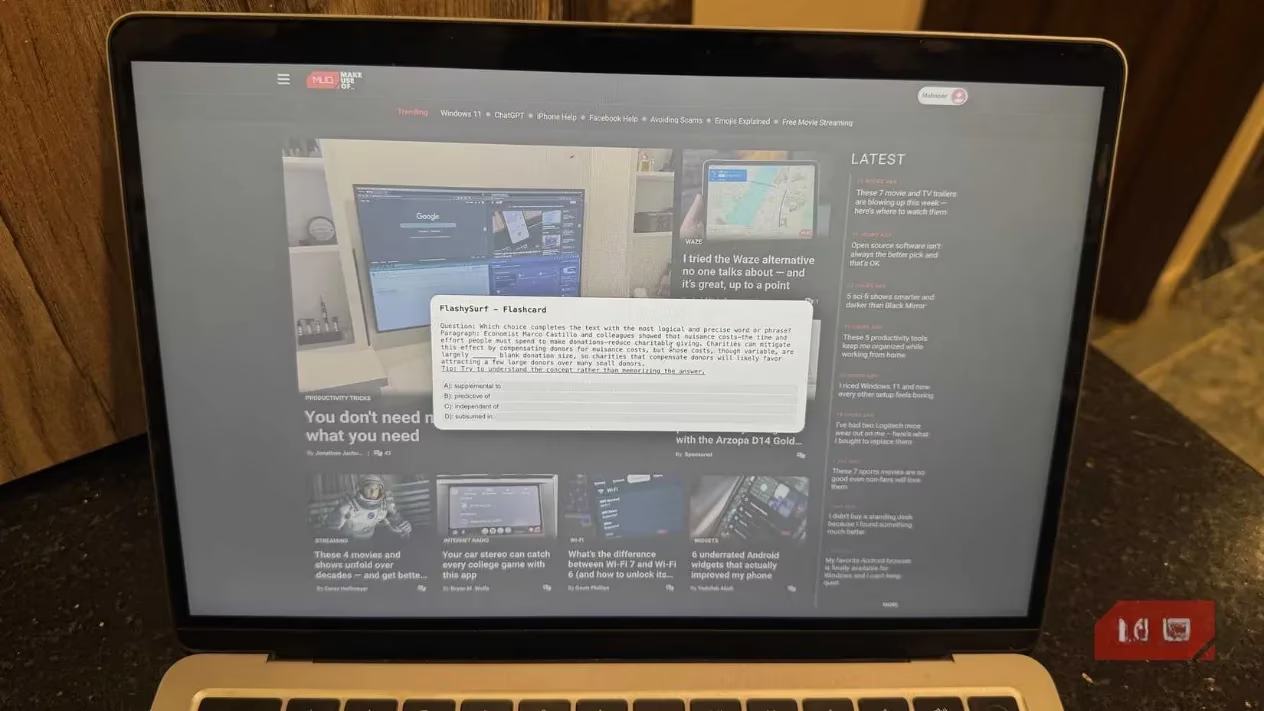
I won't lie—my first week with FlashySurf was filled with frustration. Being pulled out of a relaxing YouTube deep-dive by a calculus question felt intrusive. But something shifted. The constant, low-stakes engagement started to feel less like an interruption and more like productive micro-learning. I wasn't "finding time to study"; study was finding me, in the exact moments I was trying to avoid it.
Compared to other platforms I've used:
-
Quizlet/Anki: Require deliberate, scheduled study sessions. I could easily skip them.
-
FlashySurf: Integrates learning into the fabric of my procrastination. Resistance is futile.
The mandatory note-taking on errors has been particularly transformative. Writing "I confused the Treaty of Versailles with the Treaty of Paris because I didn't recall the year" creates a stronger neural connection than just seeing a red 'X'.
In 2026, where digital distraction is the norm, FlashySurf performs a clever psychological jiu-jitsu. It uses the very mechanisms of procrastination—random, dopamine-driven browsing—against itself. It's free, open-source, and constantly improving. For anyone who sees their browser as a black hole of time, this extension is not just a tool; it's a paradigm shift in passive learning. It has genuinely made my unproductive moments... productive.