
The digital writing landscape experienced a seismic shift in 2025 when Grammarly, the ubiquitous writing assistant, made a bold move that had tech enthusiasts buzzing. Following its acquisition of the AI email client Superhuman earlier that year, Grammarly announced it was rebranding its entire operation under the Superhuman banner, signaling a massive pivot toward comprehensive AI-powered productivity. The official blog post declared, "New powers for you," and indeed, the transformation promised to deliver far more than just grammar corrections. For millions of users, this evolution represented the perfect middle-ground—a solution that promised to eliminate the tedious dance of copying text between browser tabs and standalone AI tools like ChatGPT. Instead of faffing around with multiple applications, Superhuman Go aimed to bring everything into a single, sleek sidebar, creating an all-in-one AI companion right where the work happens.
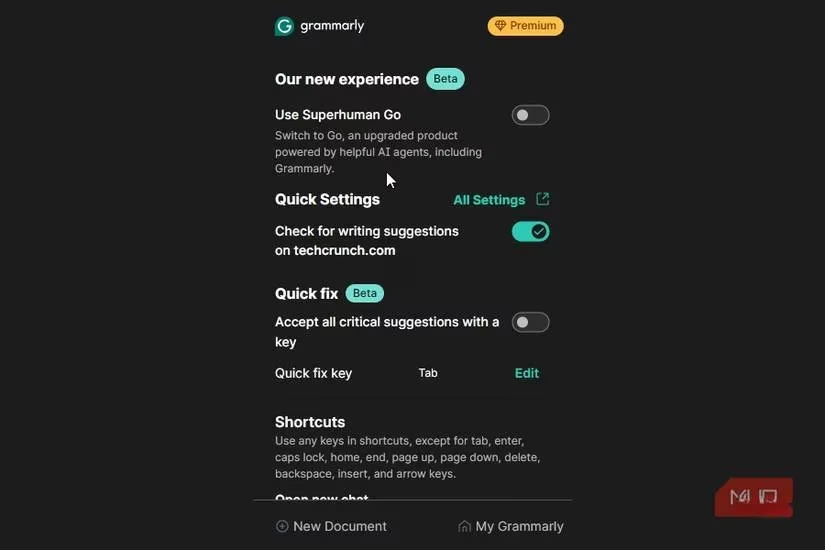
At its core, this wasn't the death of Grammarly but rather its metamorphosis into something more ambitious. The new Superhuman suite expanded far beyond spelling and grammar suggestions, integrating with popular productivity platforms like Coda, Asana, and Jira. It could fire off messages, manage email accounts, set reminders, and handle a multitude of tasks that previously required separate applications. For existing Grammarly Pro subscribers, the transition to Superhuman Go was seamless—a simple toggle in their browser extensions launched them into this new AI-enhanced world. The company offered existing Premium users access to Superhuman Go at no extra cost until February 1st, 2026, a strategic move that acknowledged the loyalty of its 40-million-strong subscriber base while introducing them to expanded capabilities.
The timing of this transformation couldn't have been more relevant. AI browsers were becoming the biggest buzz in tech, with players like ChatGPT's Atlas browser and Perplexity's Comet browser making waves. However, not everyone wanted or needed a completely new browser environment. Many users simply sought more intelligent assistance within their familiar workflows. Superhuman Go addressed this exact pain point by embedding powerful AI agents directly into the existing browsing experience. The days of copy-pasting emails into separate AI tools were numbered, replaced by an integrated system that promised to handle everything from text refinement to task management without ever leaving the webpage.
So, what exactly does the Superhuman Go Beta offer? 🚀
Upon activation, users are greeted with a sidebar containing several specialized "agents"—a deliberate naming choice highlighting their autonomous AI capabilities. This represented a significant departure from the old Grammarly Premium interface, which primarily offered floating suggestion boxes. The default agent lineup included:
-
Go: Functioning as an AI companion in your sidebar, Go could answer questions, assist with research, and even provide creative input like recipes. During testing, it efficiently helped identify issues in technical articles and responded rapidly to diverse queries, though it occasionally stumbled with live data retrieval.
-
Proofreader: Essentially Grammarly Pro's core functionality rehoused, this agent provided the familiar grammar, style, and clarity suggestions users had come to rely on.
-
AI Detector: A tool designed to identify AI-generated text, though with the important caveat that, like all similar tools, its accuracy should be taken with a grain of salt.
-
Humanizer: Intended to make AI-generated text sound more natural and less robotic, though this feature sometimes proved temperamental during initial testing.
-
Reader Reactions: A particularly innovative agent that analyzed writing to predict what readers would remember and what follow-up questions they might have, offering valuable insights for content creators.
Perhaps most exciting was the "Add agents" option, which revealed a treasure trove of integrations:
| Integration | Primary Function |
|---|---|
| LaTeX | Scientific document formatting |
| Unsplash | Stock image access |
| Asana | Project management |
| Spotify | Media control |
| Jira | Development ticketing |
| Google Drive | Cloud storage management |
| Gmail | Email composition & sending |
However, the transition wasn't without its growing pains. Some features, like the plagiarism detector within Go mode, indicated matches but failed to highlight them or generate actionable reports. Certain integrations, while functional, lacked the seamless automation that would make them truly time-saving—sending a Gmail message, for instance, still required manual input rather than automatically pulling information from open text. The interface also presented a learning curve; the option to use the original grammar-checking overlay instead of the full sidebar remained crucial for users who preferred minimal screen intrusion.
The Verdict: A Promising Bridge to AI Productivity
Superhuman Go's potential lies in its positioning as a bridge between two extremes: downloading a completely new AI browser and sticking with basic, non-integrated tools. By baking convenience into a package that millions already use, Grammarly—now Superhuman—has a head start in the race to dominate browser-based AI assistance. The real challenge will be convincing users outside the existing Grammarly ecosystem that this integrated approach is genuinely more convenient than their current copy-paste routines with ChatGPT or similar tools. That convincing will inevitably come down to two factors: demonstrated effectiveness and cost. With pricing details for 2026 and beyond still under wraps, the ultimate success of Superhuman Go remains an open question. What's clear is that the writing assistant game has changed forever, and the bar for what constitutes "helpful" AI in our daily workflows has been raised significantly. For now, Superhuman Go represents a bold step toward a future where AI doesn't just correct our mistakes but actively collaborates in our creative and productive processes.