
As online retail continues to mature in 2026, Amazon remains the default destination for millions of shoppers. Yet price manipulation tactics are more sophisticated than ever. A product may appear to be discounted by 40%, but what if its price was quietly raised a week before the sale? That question has led many budget-conscious consumers to Keepa, a free browser extension that adds granular price history charts directly to Amazon product pages. Rather than relying on Amazon's marketing labels, Keepa helps shoppers verify whether a discount is genuine.

Keepa does not require visiting a separate website after installation. Once added from the Chrome Web Store, it automatically embeds a detailed price history graph beneath every Amazon product listing. Users can see how the price has moved over days, months, or even years. For anyone who has wondered whether a “lightning deal” is actually special, the answer is often visible at a glance.
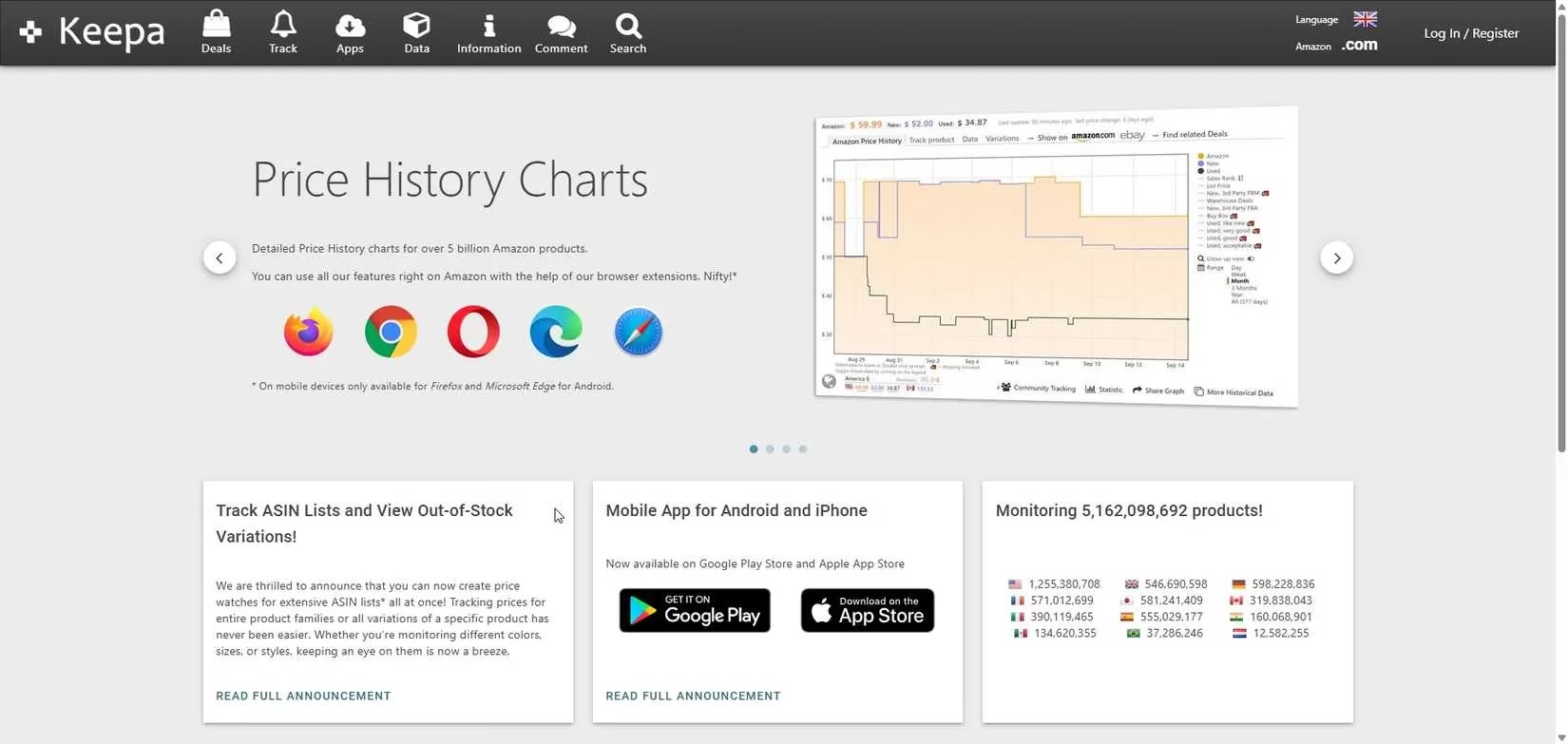
How the Price History Graph Works
The extension uses color-coded lines to distinguish pricing categories. Blue generally represents Amazon's own new-product price, while other colors track third-party sellers, used items, and marketplace offers. By examining the graph, consumers can identify patterns that Amazon's interface would never reveal. For example, an iPad might bounce between roughly $300 and $500 within a few months. If the current price sits near the historical high, a small discount may still be a poor deal.
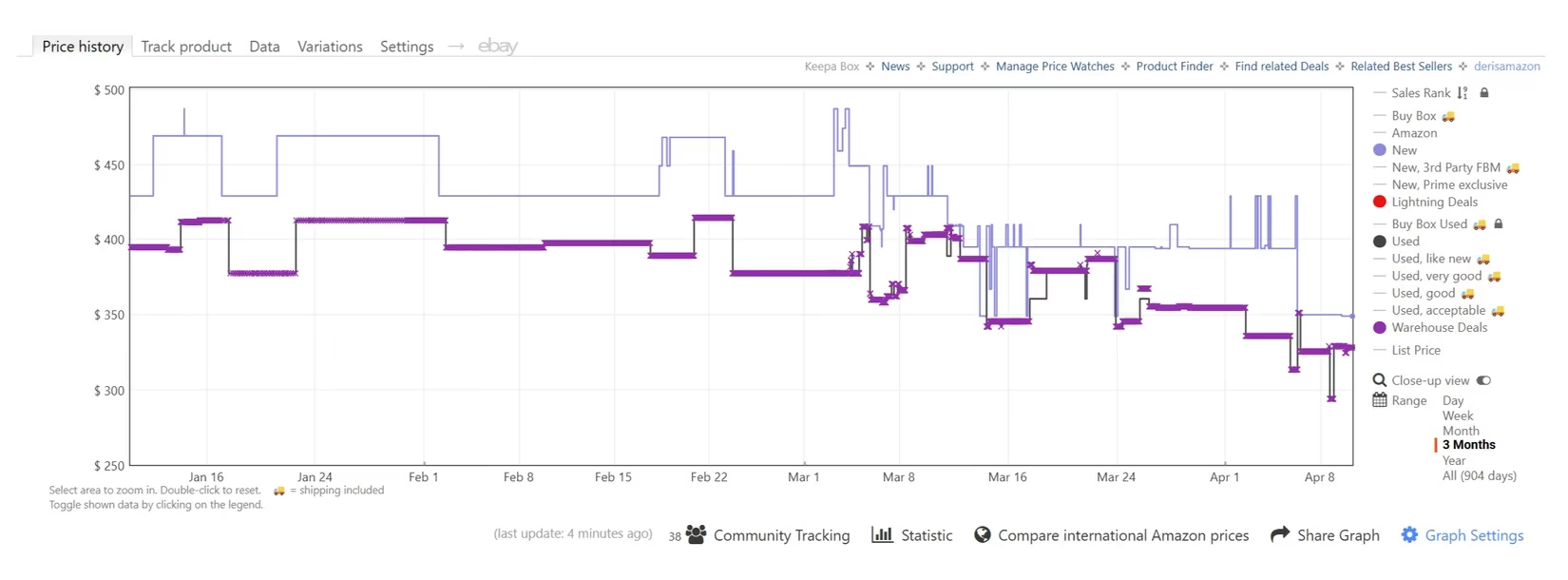
Users can zoom into specific date ranges, toggle price categories on and off, and even check stock availability over time. This level of detail makes it easier to spot predictable cycles, such as drops before Prime Day or holiday sales. Instead of guessing whether a countdown timer reflects genuine scarcity, shoppers can compare the current price with months of historical data.
Setting Price Alerts Based on Real Data
One of Keepa's most practical features is price tracking. Shoppers can click the Track product button, set a target price, and wait for notification. This is more powerful than Amazon's built-in “save for later” or wishlist alerts because Keepa alerts are tied to actual historical lows, not arbitrary promotional thresholds. For a 10th-generation iPad, a user might set a target below $300 because the graph shows it has dropped to that level before. Why settle for Amazon's version of a good price when you can define your own based on evidence?
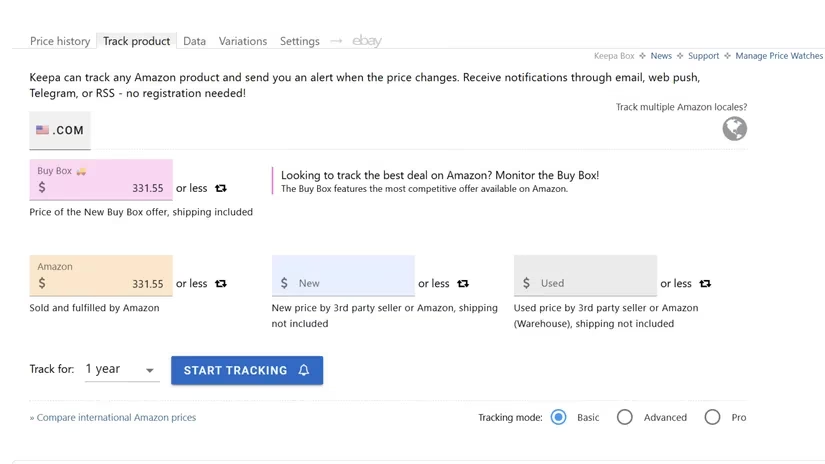
Alerts can be customized by item condition, seller type, and even percentage drop. This turns shopping into a patient, data-driven activity. Many consumers report that after using Keepa, they stop feeling pressured by “only 10 left in stock” messages and simply wait for the price to reach a level that the data supports.
The Deals Section: Discounts Compared to History
Keepa also includes a Deals section that works differently from Amazon's promotional pages. Rather than highlighting items that are merely listed as deals, Keepa calculates current prices against each product's historical average. Many products displayed there show genuine reductions of 80% or more from their usual selling price. The interface shows both the average and current price, along with the percentage drop.
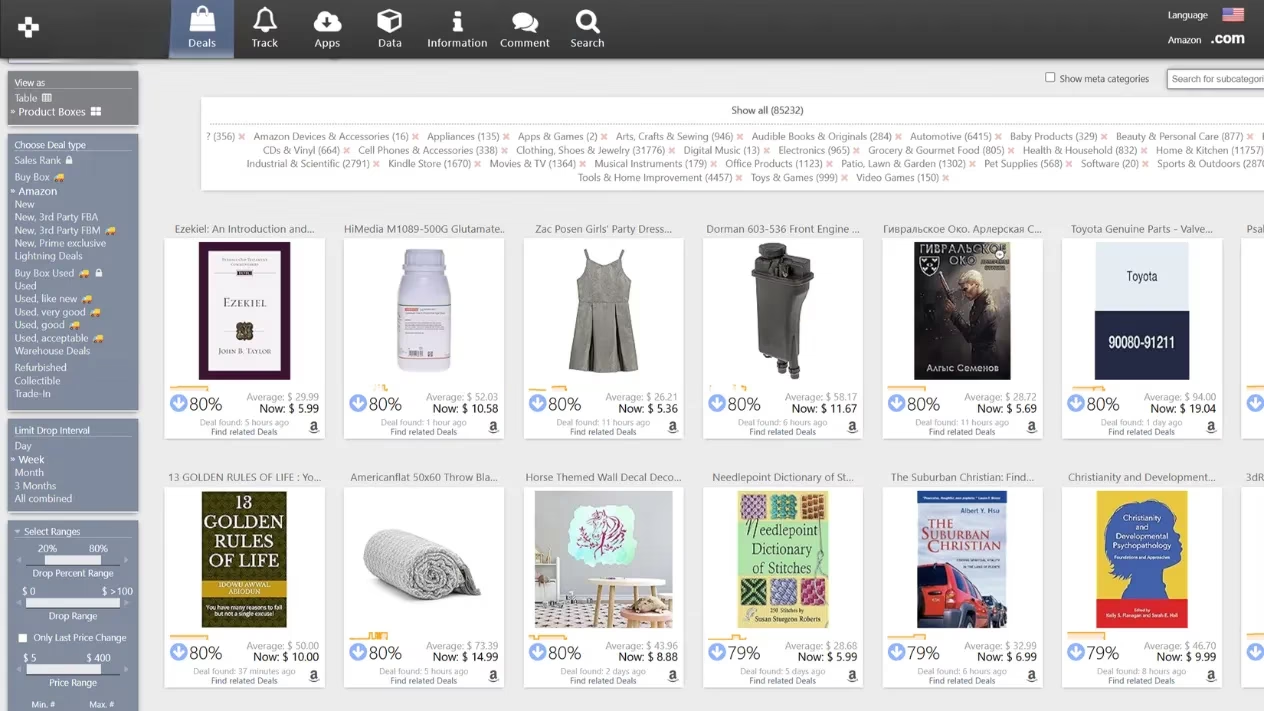
Filters allow users to narrow deals by category, price range, discount percentage, and seller type. During major sales events such as Amazon's spring sale or Prime Day, these filters help consumers find items with real markdowns. This raises an important question: should buyers trust Amazon's flashy banners, or should they verify the numbers themselves?
Minor Drawbacks
No tool is perfect. Keepa's interface can feel dense at first, especially for users unfamiliar with price tracking metrics. On slower devices, the extension may add some load time to Amazon's already crowded product pages. However, for most shoppers, these downsides are minor compared with the money saved by avoiding artificial urgency and inflated reference prices.
A More Strategic Way to Shop
By 2026, online retailers have more ways than ever to create the illusion of a bargain. Countdown timers, limited-stock alerts, and dynamic pricing all work to push shoppers into immediate purchases. Keepa offers a countermeasure: transparent, historical price data delivered exactly where buying decisions happen. Consumers who adopt this tool often become more patient and strategic. They buy at genuine lows, ignore false discounts, and feel more confident in their purchasing decisions.
The takeaway is simple. A “deal” is only meaningful if it is measured against an item's actual price history. Keepa makes that measurement effortless, and that is why it remains one of the most valuable free tools for Amazon shoppers in 2026.