
As digital footprints expand at an unprecedented rate, the illusion of anonymous browsing continues to crumble. In 2026, online tracking has evolved far beyond simple cookies and your browser's privacy mode is often the weakest link. Many users still lean on Google Chrome's Incognito mode hoping for stealth, but the truth is stark. DuckDuckGo's dedicated browser has quietly set a new benchmark for everyday privacy—and it does so without forcing users to wrestle with complex configurations.

Industry insiders have long warned that Chrome's Incognito windows only scrub traces on your local machine. The moment a session ends, cookies, cache files, and browsing history vanish from the device. This local cleanup remains helpful when you borrow a library computer or share a family tablet. However, nothing about Incognito mode cloaks your identity from internet service providers, network administrators, or the vast advertising ecosystem that shadows every click. Data packets travel through multiple servers before reaching a destination, and Incognito does nothing to obscure that journey. To external observers, an Incognito tab is just as transparent as a standard one.

Beyond network visibility, advanced fingerprinting techniques have become alarmingly proficient. Advertisers and data brokers now analyze esoteric details like installed fonts, screen resolution, WebGL parameters, and even battery status to generate a unique identifier for each device. This browser fingerprint cuts through privacy modes on many popular browsers, including Chrome. Even when users install tracker-blocking extensions, the underlying fingerprint often remains persistent, silently rebuilding a profile across different websites and sessions. The result is a false sense of security that leaves individuals exposed.
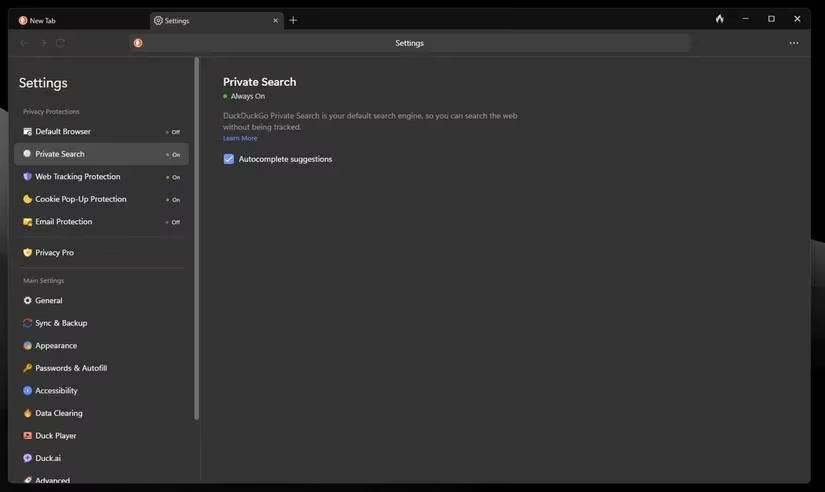
DuckDuckGo's browser enters the scene as a privacy-first alternative that has matured significantly by 2026. Originally known for a search engine that rejects personalized tracking, the company now delivers a browsing experience where protection is not an add-on but the default setting. The moment the app is launched, embedded trackers are blocked, encryption is forced where possible, and immediate privacy signals are sent to every site visited. Users no longer have to spend hours adjusting flags or curating a stack of extensions; the browser arrives locked down.
The centerpiece of this design is the iconic Fire Button. Positioned directly beside the address bar, it erases all tabs, history, cookies, and cached data with a single tap. Unlike Chrome's Incognito mode, which merely prevents local storage while the session is active, the Fire button actively resets the entire browser environment. For anyone juggling multiple accounts on the same platform or handing a device to a colleague, this instant scrub is leagues ahead of digging through several menu layers. Special sites can be fireproofed, ensuring that logins for essential services persist while everything else vanishes.
A complementary feature is the Fire Window. This isolated browsing space never writes any local history and deletes all session data as soon as the last tab closes. It also operates separately from the main browser session, preventing cross-contamination between private and regular browsing contexts. The design mirrors the intent of Incognito mode but enforces a far stricter cleanup routine without relying on the operating system's temporary file handling.

Performance has also been a quiet victory for DuckDuckGo. The browser maintains an extremely lightweight footprint, even with a dozen tabs open. Memory consumption stays conservative, sidestepping the notorious resource hunger that Chrome exhibits once extensions multiply. Snappy page loads and smooth scrolling are the norm rather than the exception. While complex graphic design tools or heavy web apps can expose the browser's stripped-down architecture, daily tasks like email, reading, streaming, and document editing feel effortlessly fast. In a year where older hardware still fuels a large portion of remote work, this efficiency translates to longer battery life and cooler devices.
VPN compatibility further separates DuckDuckGo from Chrome's erratic behavior. Starting a VPN mid-session in Chrome often triggers SSL errors, slow DNS rebinding, or pages failing to load entirely. The DuckDuckGo browser, however, has been built from the ground up to cooperate with encrypted tunnels. Whether using the integrated Privacy Pro subscription—which bundles a VPN, identity theft recovery service, and personal data scanner—or a third-party provider, the handoff is seamless. For journalists, researchers, or travelers who routinely shift IP addresses, this reliability removes a constant friction point.
The year 2026 has brought an avalanche of regulatory scrutiny to online surveillance, yet enforcement remains fragmented. Browsers that treat privacy as a second-tier feature increasingly appear out of step. DuckDuckGo's approach proves that protection does not require sacrificing speed or usability. The Fire button, hardened fingerprinting defenses, automated tracker blocking, and effortless VPN integration create an experience that feels cohesive rather than pieced together.
Consumers deserve transparency and genuine control. Incognito mode was a clever marketing term, but it never delivered true anonymity. Anyone still counting on it to shield their activities from ISPs, analytics scripts, or determined fingerprinters is operating under a dangerous misconception. Switching to a browser that was architected for privacy from day one not only strengthens personal security but also sends a signal to the industry that a privacy-respecting model is commercially viable. DuckDuckGo's quiet rise indicates that 2026 might finally be the year the incognito myth gets retired.