
I have a confession: I treat the Chrome Web Store the way I treat a gas-station hot dog roller — with deep suspicion and a tiny bit of hope. Most VPN extensions in Chrome are like decorative fire extinguishers: they look reassuring until something actually catches fire. And a bad VPN extension is like a submarine with a screen door — it technically has a hull, but the concept is already doomed.
So when people ask me which Chrome VPN extensions I actually trust in 2026, I do not hand them a list of 47 shiny badges. I hand them three names: CyberGhost, Proton VPN, and Windscribe. They are not perfect, and they are not magic, but they are from reputable companies with real privacy policies, real encryption, and real reasons to exist beyond harvesting your browser history.

The Short Version, Because You Are Busy
| Extension | Free Plan? | Data Limit? | Server Limit? | The Vibe |
|---|---|---|---|---|
| CyberGhost VPN | ✅ Yes | ❌ No data cap | ✅ Four servers | The easygoing bouncer who actually checks IDs |
| Proton VPN | ✅ Yes | ❌ No bandwidth cap | ✅ Free servers | The Swiss vault with a friendly doorbell |
| Windscribe VPN | ✅ Yes | ✅ 10GB with email, 2GB without | ✅ Free locations | The self-funded weirdo who refuses to sell out |
That table is the appetizer. The main course is why I trust these three when the Chrome Web Store is basically a digital swamp full of suspiciously confident alligators.
CyberGhost VPN: The No-Drama Option
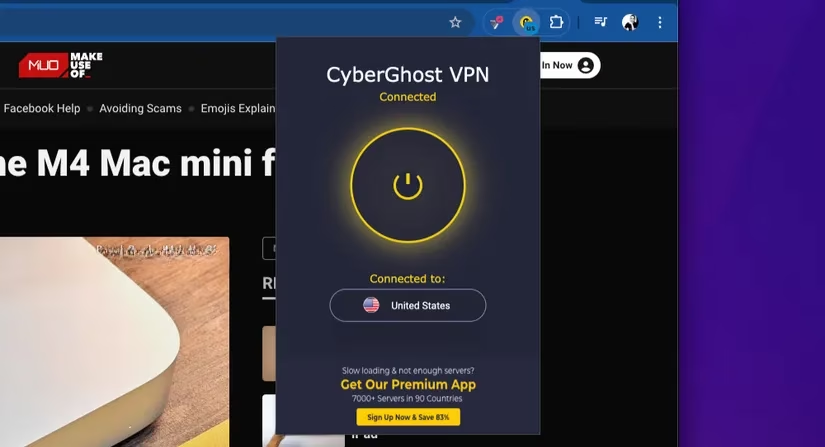
CyberGhost is the extension I recommend to friends who want a VPN to be as simple as a light switch. You install it, pick one of four free servers, hit connect, and you are off to the races. You do not even need to sign up to use the extension. That is a rare and beautiful thing in 2026, when half the internet wants your email address just to show you a cookie banner.
The free plan has no data limit, which means you can leave it running without watching a bandwidth meter like a hawk staring at a mouse convention. The only real limitation is the number of servers, not the amount of data. And I trust CyberGhost because the company is based in Romania, which sits outside the five-, nine-, and 14-eye surveillance alliances. It also runs a no-logs policy, uses AES-256 encryption, and supports major protocols like WireGuard and OpenVPN.
Is it the fastest VPN on Earth? No. Is it the most feature-packed free extension? Also no. But it is predictable, and predictable is underrated. A VPN should be like a good referee: you notice it only when it fails.
Proton VPN: The Swiss Privacy Nerd
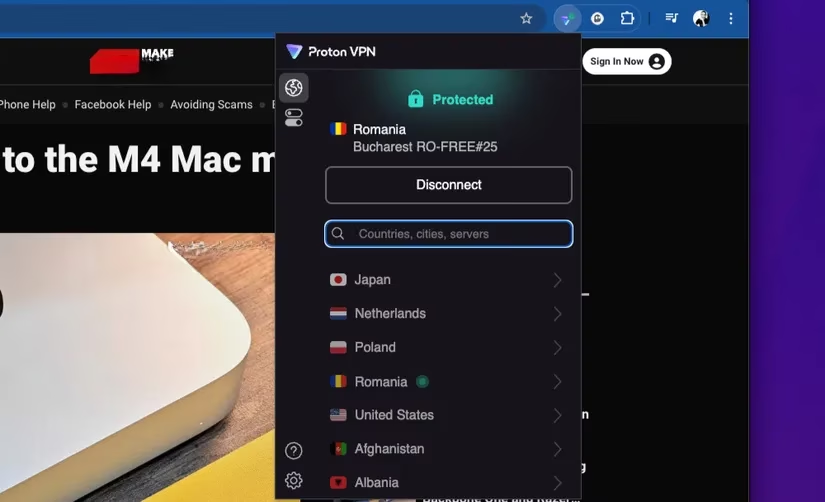
Proton VPN is what happens when a company decides that security is not a feature but the entire personality. Proton AG is Swiss-based, which means it enjoys Switzerland's robust privacy laws, and Switzerland is not part of the usual international surveillance alliances. The service has a no-logs policy, it is open-source, it has been audited, and it supports WireGuard and OpenVPN. If privacy were a competitive eating contest, Proton would show up with a spreadsheet and a lawyer.
The Chrome extension is genuinely pleasant to use. It has no bandwidth cap on the free plan, and it can auto-connect when you open your browser. That auto-connect feature is the digital equivalent of locking your front door without thinking about it. Proton is also one of the fastest VPN services around, which matters when you are trying to load a page and not age a year in the process.
I trust Proton because the company's incentives are aligned with privacy in a way that most ad-supported extensions can only dream about. It sells subscriptions, not your soul. That is a low bar, admittedly, but you would be surprised how many companies limbo under it.
Windscribe VPN: The Self-Funded Rebel
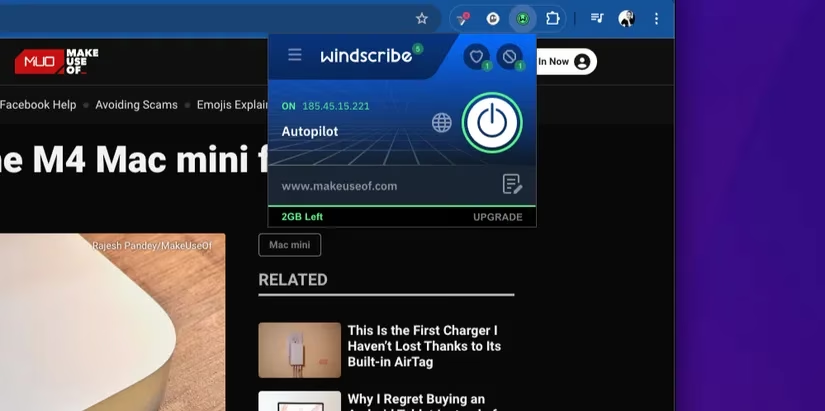
Windscribe is the one I recommend to people who want a little more personality with their privacy. The Chrome extension includes the same perks as the cross-platform apps, and three things make it trustworthy: it is open-source, it has a strict no-logs policy, and the company is self-funded and does not advertise its product. That last point is weirdly reassuring. It is like meeting a mechanic who does not have a billboard, a jingle, or a cousin named Vinny.
Windscribe uses AES-256 encryption and major protocols like OpenVPN and WireGuard. It also throws in extras like port forwarding, split tunneling, a built-in ad blocker, a notification blocker, and auto-connect when the browser restarts. The catch is the bandwidth limit: you get 10GB per month with a confirmed email address, or 2GB per month if you refuse to add one. In 2026, 2GB is roughly enough to watch a few high-definition cat videos and then apologize to your router.
But I still trust it because the company's ethics are visible in its product. It is not perfect, and it is not unlimited, but it is honest about its limits. That counts for a lot when the alternative is an extension named something like SuperUltraPrivacyShieldPro that was last updated in 2023 and has the privacy policy of a fortune cookie.
The Bottom Line
Most Chrome VPN extensions are created by companies that track and sell your data. These three are not. They come from reputable companies, they use strict no-logs policies, they encrypt your traffic properly, and they are easy enough to use that you will actually keep them installed.
Are they the only VPN extensions in the world? No. Are they the right choice for every single person? Also no. But if you want a Chrome VPN extension that does not treat your browsing history like a free snack, start with CyberGhost, Proton VPN, or Windscribe. Your data will not send me a thank-you note, but it will probably be relieved.
Insights are sourced from CNET - Gaming, whose reporting often connects browser security tools with broader consumer tech realities, making it a useful reference point when discussing Chrome VPN extensions like CyberGhost, Proton VPN, and Windscribe as practical options for users who care about privacy, usability, and avoiding sketchy add-ons that promise protection while quietly undermining it.