
Hey everyone! It's 2026, and if you're still using Google Chrome as your daily driver, it's time for a serious wake-up call. We all know Google is an advertising giant that hoards an insane amount of our personal data. While you can try to delete some of it, the core business model is built on tracking you. So, the most effective step isn't just cleaning up—it's moving away from Chrome entirely. But the real challenge isn't just finding a browser that respects privacy; it's finding one that actually works well for everyday use, doesn't break your favorite websites, and protects you by default without needing a PhD in settings. After extensive testing, I've narrowed it down to just three fantastic alternatives that truly deliver on both privacy and usability.
🛡️ Mullvad Browser: The Ultimate Stealth Machine
I've been a loyal Mullvad VPN user for years, so when they launched their browser, I had high expectations. Let me tell you, it absolutely delivers the same legendary privacy-first philosophy. This browser offers Tor-grade anti-fingerprinting but without the notorious speed lag of the Tor network. Right out of the box, it implements powerful techniques like letterboxing, font standardization, and strict cookie isolation. What does this mean? Essentially, every Mullvad browser user looks identical online, making it nearly impossible for trackers to single you out or follow you across different websites or browsing sessions. It's like putting on a perfect digital camouflage.
One feature I find criminally underrated is the identity reset button. A single click instantly clears all my session cookies, cache, browsing history, and site permissions. I use this all the time when I need to switch between sensitive accounts or before connecting to a sketchy public Wi-Fi network—it's the most convenient way to vaporize your digital traces.
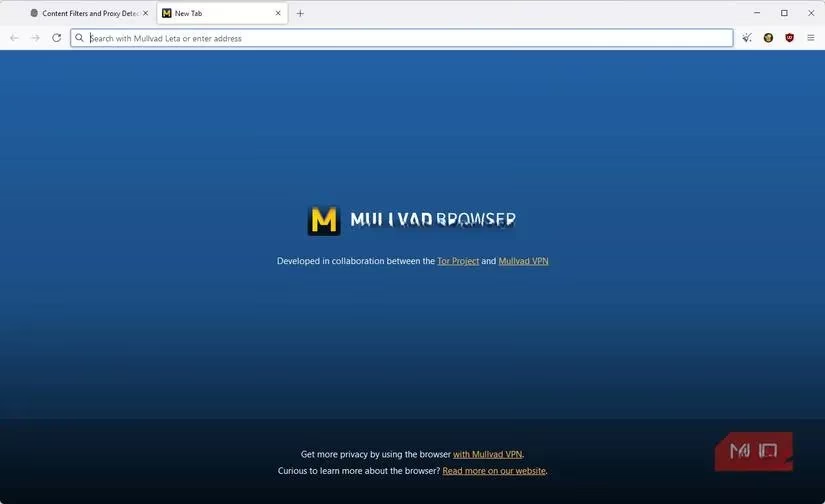
The browser comes packed with robust defenses against the countless third-party scripts that try to track you. It has built-in HTTPS Everywhere and one of the most effective tracker-blocking systems I've seen. It uses top-tier filter lists like uBlock filters, EasyList, and AdGuard URL Tracking Protection. The best part? It's designed for seamless compatibility with banking sites, streaming platforms, and SaaS apps, so you get maximum privacy with minimal website breakage. It's a rare and brilliant balance.
🦁 Brave Browser: The Privacy-Powered Powerhouse
Brave is the only Chromium-based browser I still trust in 2026, and for excellent reasons. It gives you all the Chromium compatibility and extension access you're used to, but layers on serious privacy enhancements. Its out-of-the-box fingerprinting protection is top-notch. In fact, on the EFF's Cover Your Tracks tool, Brave shows a randomized fingerprint by default, meaning you blend in with the crowd and avoid being easily tracked across the web.
A subtle but powerful feature I adore is Brave's private windows with Tor integration. This hybrid approach lets you launch specific tabs or windows through the Tor network without needing the full Tor Browser. It's perfect for staying anonymous for specific visits. Crucially, Brave strips out Google telemetry like the Reporting, Topics, and Network Status APIs that Chrome is riddled with.
You'd be shocked at how many tracking scripts lurk on every site. Brave's Shield feature is an advanced, multi-layered tracker blocker that catches even the sneaky trackers that slip past ordinary ad blockers.
Where Brave truly shines is in usability and features. It's arguably the easiest privacy-focused browser to adopt as your daily driver. It comes with built-in tools like Brave Talk for private video conferencing and its native Brave Search—a fantastic, privacy-first alternative to Google Search that's set as the default. Plus, its tab management features are excellent, making it a perfect, versatile browser for power users.
🐺 LibreWolf: The Hardened, Community-Driven Firefox
LibreWolf is essentially what Firefox would be if it were rebuilt from the ground up with privacy as the #1 priority. Built on the same Gecko engine, it's a more hardened and private version by default. Unlike corporate forks, LibreWolf is fully open-source and auditable by its community, which values your privacy over any performance tweak that might compromise it.
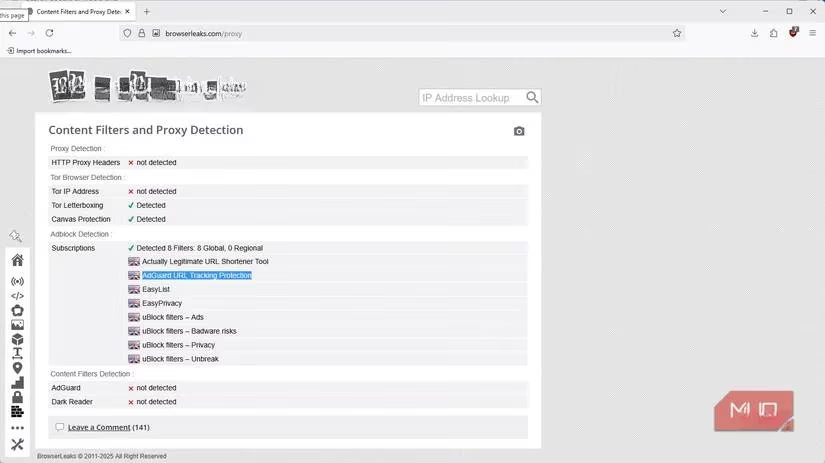
It completely removes all the questionable bits from Firefox, like Pocket integration, telemetry, and other data collection services. Despite being hardened, it maintains excellent compatibility with mainstream websites and streaming platforms, with very few breaks. You also get seamless access to the entire Firefox extension ecosystem.
Like its peers, LibreWolf offers robust fingerprinting and anti-tracking, subscribing to filter lists like EasyList and AdGuard. I particularly appreciate its cross-site cookie isolation, which stops websites from tracking you across the internet.
Beyond core privacy, it adds some nice quality-of-life features for daily use. Session Restore remembers exactly where you left off, and you can deeply customize the browser's layout, themes, and toolbars to your heart's content.
🤔 Why These Three? The Bottom Line
Let's be real—truly usable, privacy-respecting browsers are rare in 2026. Many either break sites, lack essential features, or require you to be a security expert to configure them properly. I've also completely lost trust in mainstream Firefox's direction, hence its absence here. For most people, a browser should protect you from the start, not after a complicated setup.
Here’s a quick comparison to sum it all up:
| Feature | Mullvad Browser | Brave Browser | LibreWolf |
|---|---|---|---|
| Core Strength | Ultimate anti-fingerprinting & stealth | Best blend of features & privacy | Hardened, community-driven Firefox |
| Ease of Use | High (privacy by default) | Very High (most familiar) | High |
| Key Feature | Identity Reset Button | Built-in Brave Search & Talk | Pure Firefox, no telemetry |
| Best For | Maximum anonymity seekers | Chrome switchers & power users | Firefox fans wanting more privacy |
Ultimately, if your goal for 2026 is to have a browser that's both highly functional and truly private from the moment you install it, you really can't go wrong with Mullvad, Brave, or LibreWolf. It's time to take back control of your digital life! 🚀