
As I open my browser each morning, I'm no longer just accessing the internet; I'm stepping into a carefully curated version of it, one designed not by chance, but by a complex web of financial agreements, algorithmic choices, and corporate priorities. Have you ever stopped to consider that the simple act of opening a new tab is the entry point to a reality shaped by forces beyond your immediate control? It's a sobering thought: the tool we use to explore the vast digital universe is, in fact, a powerful filter, deciding what we see, how we see it, and even what we're encouraged to know. This isn't just about convenience; it's about the fundamental architecture of our online experience.
The Billion-Dollar Deals Behind Your Search Bar
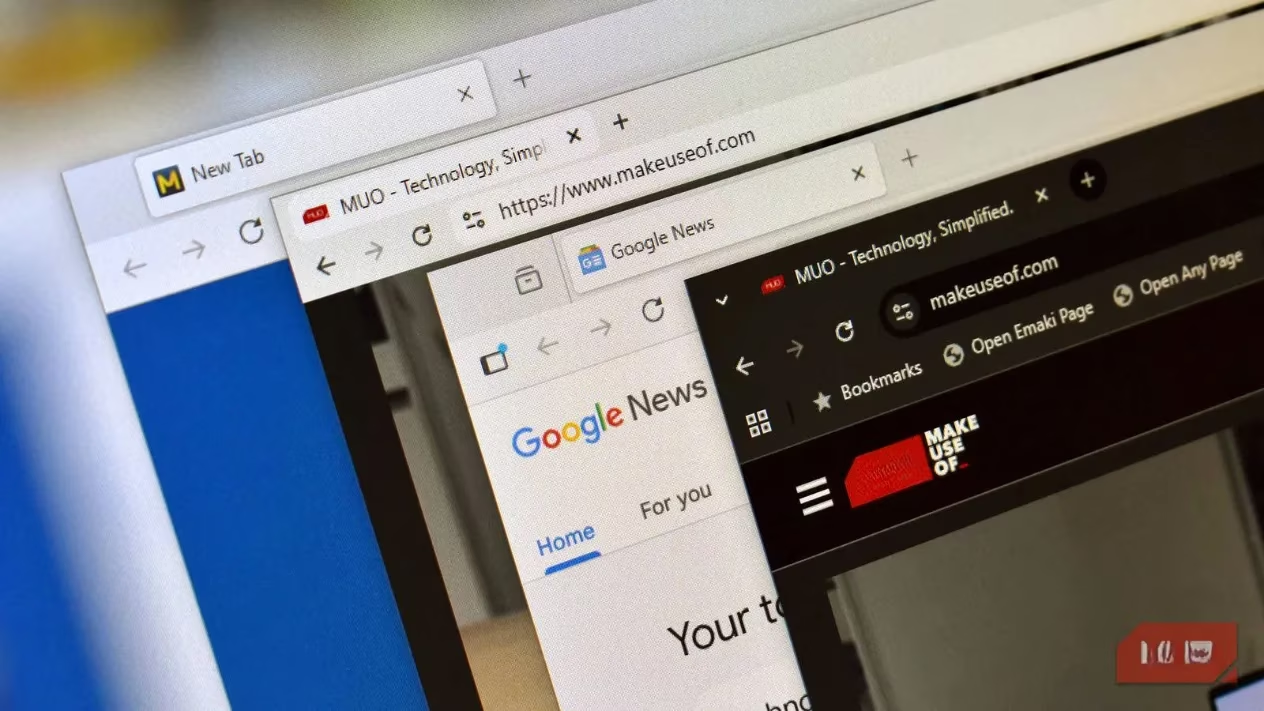
Let's start with the most obvious, yet often overlooked, gatekeeper: the default search engine. Is it truly a neutral gateway to information? Far from it. This prime digital real estate is the subject of multi-billion dollar partnerships that fundamentally steer our digital journeys. Consider this: Google reportedly pays Apple around $20 billion annually to remain the default search engine in Safari. When you launch Chrome, you're kept firmly within Google's search ecosystem. Open Microsoft Edge, and you're gently nudged toward Bing. These aren't random choices; they are highly lucrative, exclusive deals that have even attracted legal scrutiny for potentially limiting competition. While we can change these defaults, the reality is that most of us never do. The result? A predictable flow of traffic and revenue, meticulously shaped by the financial interests of the browser makers themselves. The very first step of our online journey—typing into that search bar—is already on a pre-determined path.
The Curated Newsfeed: Your 'Personalized' Starting Point
What greets you when you open a new tab? It's rarely a blank canvas. Instead, you're presented with a feed—news cards, trending topics, suggested sites. But who curates this content, and to what end?
-
Microsoft Edge prominently features MSN and the Microsoft Start feed.
-
Google Chrome pushes its Discover articles.
-
Opera serves "Smart News" from its content partners.
These feeds are designed to be engaging, offering the kind of information we might want. Yet, beneath the surface, they serve a dual purpose: keeping us within the browser's ecosystem and subtly promoting its services and advertisers. The algorithms powering these feeds use our data to rank and filter content, deciding which news story appears first, which site is recommended. It feels personal, but it's economically optimized—for the platform. This subtle steering shapes our perception of what's important, new, or trending, crafting a unique 'version' of the web for each of us.
Privacy Settings: The Unseen Arbiters of Web Economics
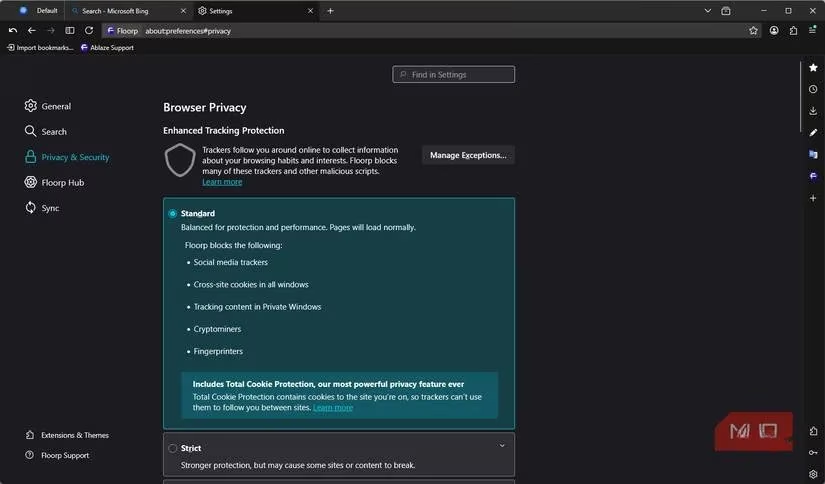
In 2026, privacy isn't just a feature; it's a powerful economic force that determines which parts of the web thrive and which struggle to survive. Different browsers adopt starkly different philosophies, and this directly alters the internet we experience.
| Browser | Default Privacy Stance | Economic & Experiential Impact |
|---|---|---|
| Safari & Firefox | Aggressive. Block cross-site tracking, fingerprinting, & third-party cookies by default. | Creates a cleaner, less ad-heavy browsing experience. However, it can strip revenue from smaller sites reliant on personalized ads, potentially affecting their sustainability. |
| Google Chrome | Balanced. Implements the "Privacy Sandbox," phasing out traditional cookies but introducing new interest-based identifiers. | Aims to preserve the personalized ad economy that fuels much of the web (and Google's ecosystem). Sites may still function with targeted ads, but under a new, Google-influenced framework. |
Think about it: an article might load perfectly in Chrome with its full suite of ads and analytics. Open the same page in Safari, and it might appear with broken ad slots or limited tracking. The browser's privacy defaults are no longer mere personal settings; they are gatekeepers that influence which business models are viable, ultimately deciding what kind of content and websites can afford to exist. The version of the web you see is, in part, a reflection of your browser's privacy ideology.
The Engine Monopoly: Chromium's Invisible Rule
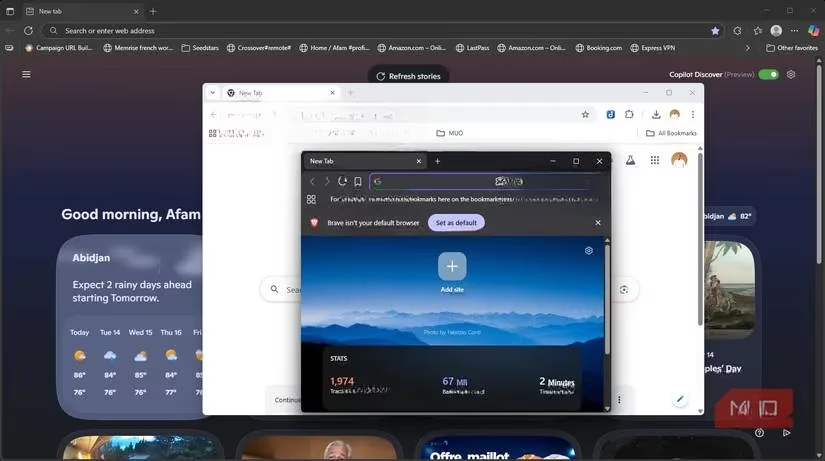
Beneath the familiar interface of your browser lies its engine—the invisible software that interprets website code and paints the page on your screen. Here lies perhaps the most profound centralizing force: the dominance of Chromium's Blink engine. Powering Chrome, Edge, Opera, Brave, and more, it drives over 75% of global web traffic. What does this mean for your internet?
-
For Developers: It simplifies life. "Test for Chrome" often means "works for most users." This reshapes priorities, leading to a web optimized primarily for Chromium.
-
For Innovation: When one engine sets the de facto standard, innovation on alternative engines (like Firefox's Gecko or Safari's WebKit) slows. Features built for Chromium may break elsewhere.
-
For You: The open web, in practice, operates on a foundation dictated by what Chromium can or cannot do. You experience a web that has been subtly shaped to conform to the capabilities and quirks of a single engine. Diversity of experience diminishes.
AI Interpreters: Redefining 'Browsing' and Knowledge Itself
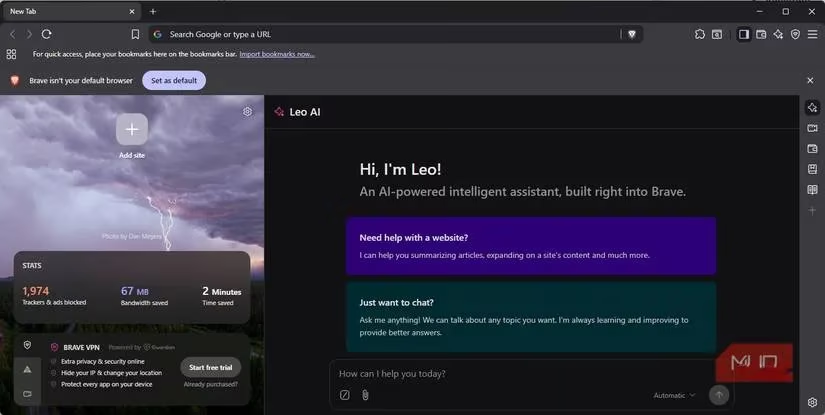
The latest evolution transforms browsers from passive windows into active interpreters. With AI assistants like Edge's Copilot, Opera's Aria, and Chrome's AI features, we're encouraged to ask questions directly in the sidebar, getting summaries and answers without ever visiting a source website. This is a seismic shift.
Why click through to an article when your browser can distill it for you? But this convenience comes with a profound implication: you are now receiving an interpretation. Copilot leans on Bing and OpenAI, Aria uses its own GPT-based system, and Google's AI is trained on its Gemini model and vast search index. Ask the same question to two different browsers, and you may get answers with different emphases, tones, or even implied facts. The browser is no longer just showing you the web; it's actively mediating, contextualizing, and influencing how knowledge is presented and what is deemed authoritative. The AI doesn't just assist your search; it shapes the very context of the information you receive.
Reclaiming Your Digital Agency: A Practical Guide
Navigating the web on your own terms in 2026 feels like an uphill battle against defaults, deals, and algorithms. But it's not hopeless. Conscious action can help you break free from the most restrictive filters. Here’s where you can start:
🔍 Audit Your Defaults: This is the most powerful step. Question every preset.
-
Search Engine: Ditch the default. Try privacy-focused alternatives.
-
New Tab Page: Can you set it to a blank page or a minimalist dashboard you control?
-
Extensions: Be ruthless. Remove toolbars or add-ons that inject ads or track you.
🛡️ Fortify Your Privacy: Go beyond the browser's default settings.
-
Adjust site permissions (location, camera, notifications) regularly.
-
Consider using containers (like Firefox's) to isolate logins and tracking.
-
Regularly clear cookies and site data for non-essential sites.
⚙️ Diversify Your Toolkit: Don't pledge loyalty to one browser.
-
Use different browsers for different activities (e.g., one for sensitive work, another for general browsing).
-
Periodically try independent browsers to support ecosystem diversity.
-
Remember, your browser is a tool you configure, not an immutable environment.
The goal isn't to achieve perfect neutrality—that's likely impossible. The goal is awareness and intentional customization. By understanding the forces that shape our browser—from the deals on the start page to the AI in the sidebar—we can make more informed choices. We can transform our browser from a pre-packaged portal into a tool that truly serves our own interests, curiosity, and need for a genuinely open web. The first step to seeing a different internet is realizing that the one you're seeing right now has already been carefully arranged for you.