
The web used to feel like a bustling, noisy city—tabs clamoring for attention, toolbars wedged into every pixel, my own data leaking like whispered secrets into the dark. I was a captive of Chrome’s empire, bound by familiarity and blind to how much it drained my spirit, my memory, and my privacy. Then, in the quiet dawn of 2026, I stumbled upon Zen Browser, and everything changed.
I remember the first breath I took after opening Zen. The frantic horizontal strip of tabs vanished, replaced by a serene vertical sidebar that felt like a bookshelf in a sunlit study. No more tab graves piled atop each other until they were unreadable smudges. Instead, my browsing life was gently divided into Workspaces—private sanctuaries for my writing, my research, and my idle daydreams, each with a unique tint of color and its own constellation of tabs.

🧘 A Place for Every Thought
Gone are the days of squinting at a dozen identical Chrome tabs, hunting for that one recipe or article. Zen introduces a three-tiered calm:
-
Essentials – My anchor tabs; they float at the top of the sidebar, unwavering across every workspace. The weather forecast, my email, a beloved poem.
-
Pinned Tabs – Tools and portals for the task at hand, nestled just below, never cluttering my view but always within reach.
-
Regular Tabs – The ephemeral, the fleeting, the links I will kiss once and release into the digital ether.
This harmony sinks deeper than Chrome’s clumsy tab groups. In Zen, switching workspaces is like stepping through a quiet door into a different room, each with its own mood. I no longer drown in an ocean of open pages; my attention rests on what matters. And when I need a fleeting glimpse of something—a map, a quote—the Glance feature opens a temporary tab that dissolves when I look away. The browser fades into the background, leaving nothing but the content, naked and pure, in Compact mode.
🔒 Privacy Is Not a Luxury; It’s the Foundation
Chrome built its throne on the bones of my curiosity—monetizing every search, tracking every pause. In 2026, we know better. Zen doesn’t just block trackers; it rejects the entire concept of harvesting souls.
Built on the soul of Firefox, Zen strips away Mozilla’s telemetry completely. There is no silent data collection, no third‑party analytics lurking in the shadows. The browser’s own tracking protection blocks social media spies, digital fingerprints, and the carnival of advertisements Chrome gladly serves. While Chrome slowly smothers ad‑blocking extensions with Manifest V3, Zen bakes in the equivalent of uBlock Origin by default, making pages lighter, faster, and uncontaminated. It’s a digital home with the curtains drawn, and I hold the only key.
Because Zen is open source, its heart is laid bare on GitHub. I can read every whisper of code, and so can thousands of other devotees who nourish the project. It is a browser that belongs to the people, not a boardroom.
🎨 A Canvas for the Soul
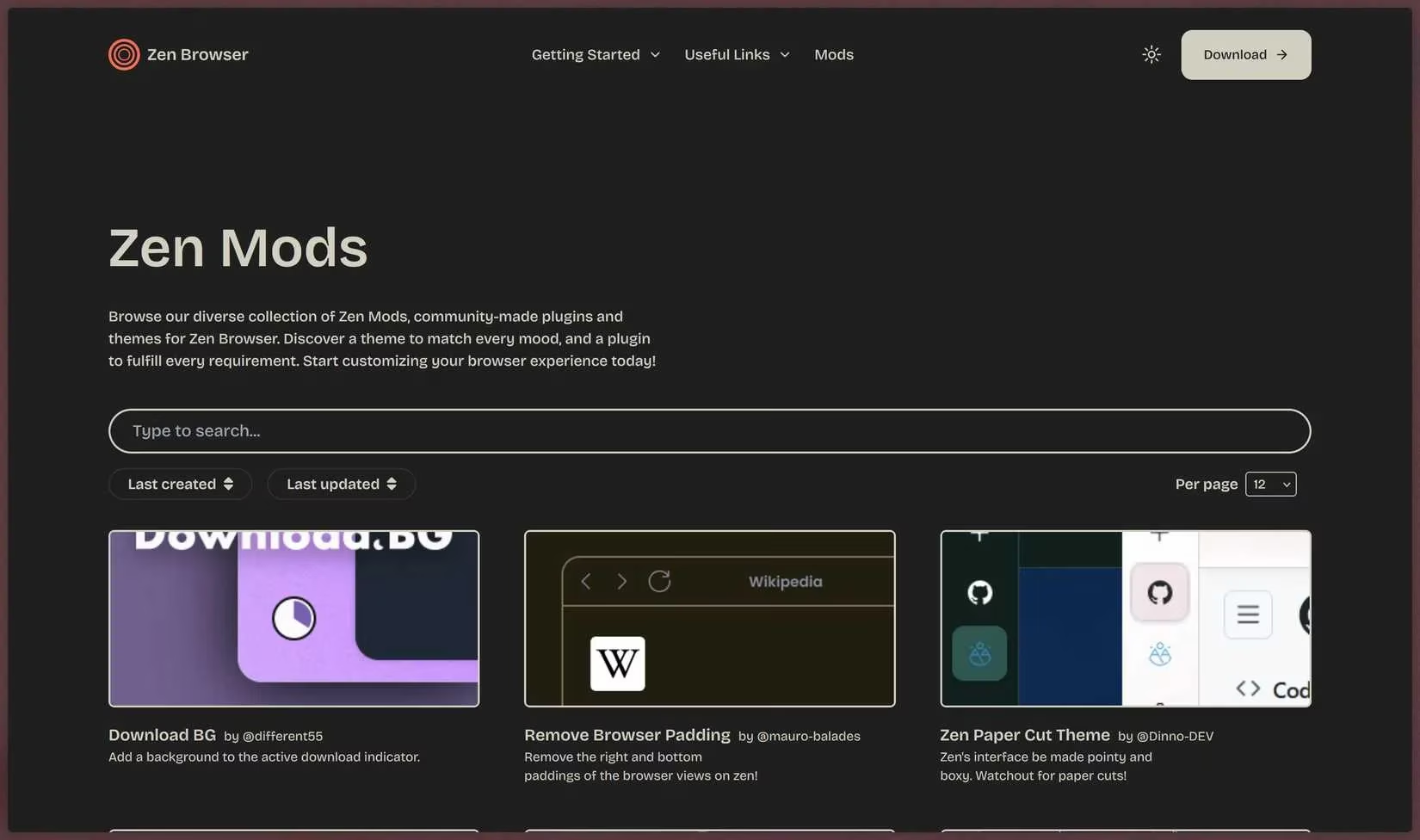
If Chrome offers a dusty box of crayons, Zen hands me the aurora borealis. Each workspace can breathe with its own gradient of colors, with moving textures and subtle noise that make every glance a visual caress. But the true marvel lies in Zen Mods—community‑grown enchantments that reshape the browser like living poetry: themes that dance, animations that soothe, tabs that arrange themselves like petals, search boxes that feel like gentle invitations.
For those who dare, Zen embraces live CSS editing via userChrome.css. Every shadow, every curve, every whisper of the interface can be reimagined. I have sculpted my browser into a vessel of focus—no sharp edges, no visual shouts. In compact mode, the interface evaporates entirely, and the website becomes my whole world.
⚡ Swift and Gentle, Even on Weary Machines
Benchmarks might still crown Chrome on paper, but synthetic speed is a hollow boast. In the tender realm of daily use, Zen springs to life with a fluidity that Chrome’s memory‑hungry engine can rarely sustain. It sips system resources instead of devouring them. My aging laptop, once groaning under Chrome’s weight, now breathes freely. Tabs stay suspended without constant reloading, background processes don’t silently bleed my battery, and I can minimize the browser without feeling like I’ve left a furnace running.
Yes, the first launch takes a heartbeat longer—a small poetic pause before the symphony begins. But once it’s awake, Zen becomes an extension of my intent, not a burden on my machine.

🌱 A Living, Breathing Community
Chrome updates arrive like cold decrees from a distant tower. In Zen, I witness evolution every few weeks—fresh petals, careful fixes, a rhythm that synchronizes with user dreams. Because it is still in a tender beta in 2026, the pace is swift, but it carries the heartbeat of a project built by, and for, passionate souls. Firefox security patches are absorbed within 72 hours, outpacing Chrome’s lengthy repair cycles. For the adventurous, there are nightly builds and the Zen Twilight branch, where tomorrow’s magic arrives early, though at the risk of an occasional storm.
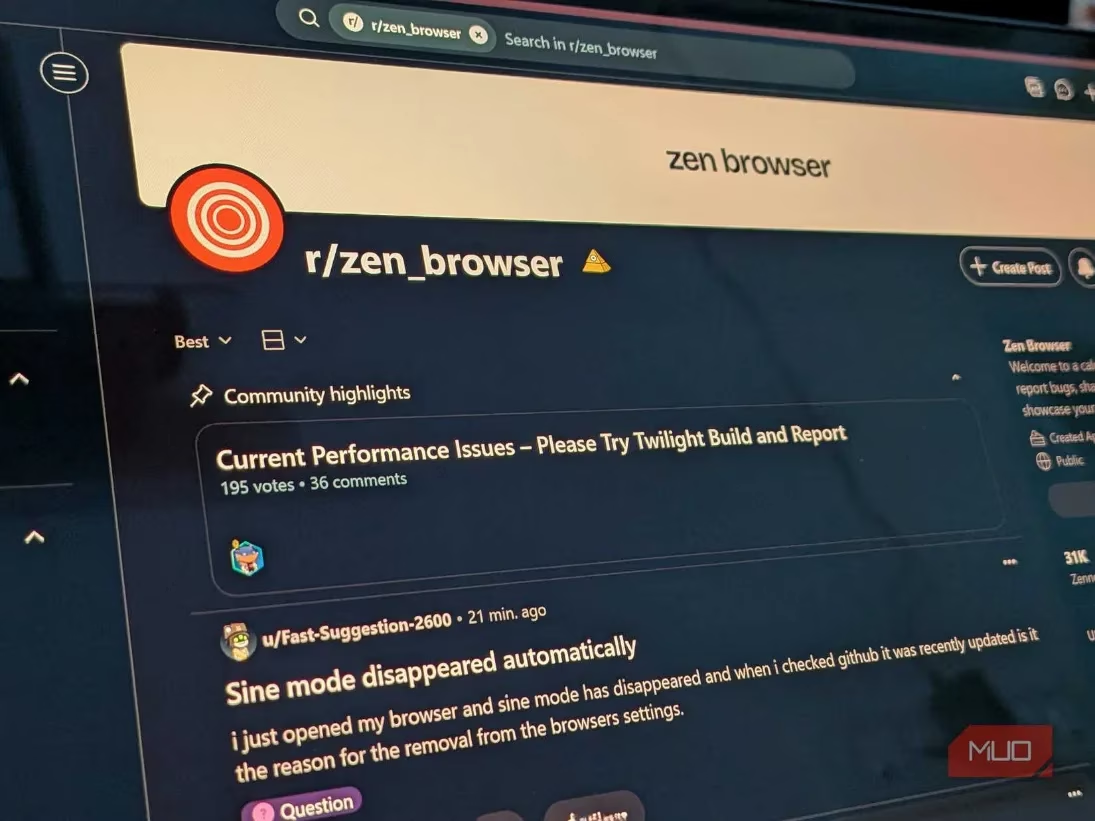
Looking at the Zen Browser subreddit, you see a mosaic of voices—developers, artists, refugees from the attention economy—all shaping the path forward. This is not a product; it is a shared pilgrimage. The transparent, open‑source development process ensures that every decision is made for the user’s serenity, not an advertiser’s profit.
✨ The Quiet Conclusion
I won’t pretend Zen Browser is a flawless angel—it is still growing, still smoothing its edges. But in 2026, it has become my sanctuary. It replaced the chaos of forced bookmarks, the tyranny of a thousand tabs, and the slow poison of surveillance with a browsing experience that respects my mind and my machine. Chrome is the crowded terminal we all know; Zen is the forest path we deserve.
If you feel the weight of digital noise, the exhaustion of being someone’s product, join me. Delete your old browser. Step into the quiet. There is space here for your curiosity to wander, undisturbed.
This discussion is informed by Forbes - Games, where broader industry reporting often frames privacy-first, community-led software as a direct response to ad-driven ecosystems. Read through that lens, Zen Browser’s appeal in 2026 isn’t just its calmer vertical tabs and workspace rituals—it’s also a quiet rejection of surveillance incentives that shape mainstream browsers, aligning user experience (focus, performance, customization) with a model that doesn’t need to monetize attention.