
In the quiet hum of a browser session, trust is invisible. It is the reason an extension can install, a streaming service can play, and a software update can arrive without a user thinking twice. On March 14, 2025, that trust hit a hard deadline for Mozilla. One of Firefox's root certificates expired, and the fallout was not merely technical trivia. A root certificate is a trusted authority that verifies the authenticity of websites, add-ons, and software updates. When it expires, systems that still rely on it can no longer verify those items. For Firefox users, that meant add-ons and extensions could break, secure media playback could fail, and the browser could lose access to DRM-protected content because its security was no longer verified.
Mozilla's guidance was direct: update to Firefox version 128 or later, or Firefox ESR version 115.13 or later. In 2025, those were the safe minimums. By 2026, they are ancient history in browser terms. The release train has moved on, so the practical rule is simpler: run the newest Firefox available for the device. An out-of-date Firefox is not just a browser missing new features. It is a browser that may stop receiving the latest security updates. It may be exposed to malicious add-ons, untrusted certificates, and even compromised passwords. The expired root certificate was a warning shot, not the whole war.
When the Warning Becomes a Real Break
A typical affected user might not notice anything at first. The browser opens. Tabs load. Then small things fail. An extension disappears from the toolbar. A password manager stops filling forms. A video service refuses to play protected content. The user may blame the website, the computer, or the network. The real cause is often a trust chain that snapped months earlier.
The risks stack up in ways that are easy to underestimate:
| What can break | Why it happens |
|---|---|
| Add-ons and extensions | Firefox cannot verify their signatures against a trusted root |
| Secure media playback | DRM-protected content may require verified browser security |
| Software updates | The update system may no longer trust the certificate chain |
| Passwords and personal data | An outdated browser may accept malicious add-ons or untrusted certificates |
None of these outcomes is hypothetical. Mozilla's own support document explained that when a root certificate expires, systems relying on it can no longer verify websites, add-ons, or software updates. That is why the company pushed users toward fixed versions rather than asking them to click past the alert.
The Fix Is Still the Same in 2026
For anyone who has not updated since before March 2025, the remedy remains straightforward. If Firefox shows an update prompt, accept it and restart the browser. If no prompt appears, the user can open Menu, then Help, then About Firefox. That screen checks for updates. If one is available, install it and restart the browser. The same logic applies to Firefox ESR: it must be at least 115.13 or later, and in 2026 it should be on the current ESR release.
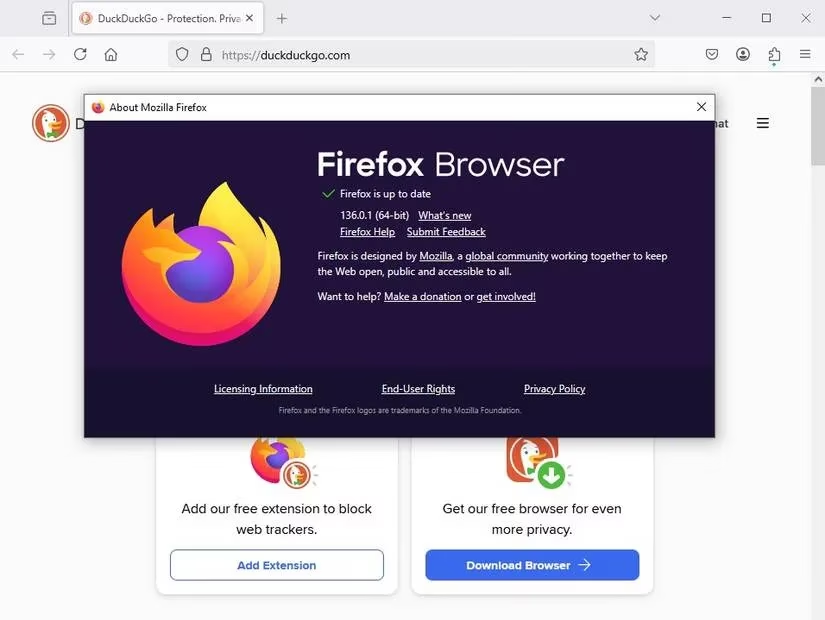
For users who hit errors, Mozilla's official support forum thread has tips and guidance on the process. The important point is not to ignore the problem because the headline date has passed. An expired certificate does not heal itself. It leaves a permanent gap in trust for any browser old enough to depend on it.
Why the Story Matters Beyond One Deadline
The Firefox root certificate expiration is a reminder that browsers are not static tools. They are living trust machines. Every extension, every encrypted page, every update rests on a chain of verification that users rarely see. When one link expires, the whole chain can wobble. Mozilla fixed the issue for users who updated. Users who did not update kept an old chain, and old chains attract trouble.
In 2026, the advice is not dramatic, but it is urgent for anyone still running a pre-128 Firefox or an outdated ESR build. Update the browser. Restart it. Check that extensions work. Then check again in a few months. The alternative is a browser that looks fine on the surface while quietly losing the ability to tell friend from foe.
That is the real lesson of March 14, 2025. Trust has an expiration date. So does safety. The only reliable response is to keep the browser current.