
I used to hand over my data like it was spare change—without a second thought. Every online form, every "Sign in with Google" click, every social media poll felt harmless. But after realizing just how much companies tracking, collecting, and selling my information had woven itself into my daily life, I knew I had to make a change. My digital footprint wasn't just a trail of crumbs anymore; it was a full-blown treasure map for advertisers and data brokers.

Over the last couple of years, I've slowly swapped out the convenience-first apps I was using for services that genuinely respect my privacy. The process wasn't overnight, but each switch felt like reclaiming a little piece of my own life. Let me walk you through the tools that now form my privacy fortress—and honestly, I can't imagine going back.
Email Aliasing: No More Spam, No More Guilt
Your inbox is like a public bulletin board where everyone can pin a note with your name on it. You give out your email address and, poof, it ends up in a hundred databases you never even knew existed. That's where SimpleLogin came into my life, and boy, did it flip a switch.
SimpleLogin, by Proton, lets you create unique email aliases on the fly. Instead of handing over my real email, I generate a fresh alias for each service—like [email protected]. Every message sent to that alias gets forwarded to my primary inbox, but the sender never sees my actual address. If one of those aliases starts getting spam or gets leaked in a breach? I just disable it. Problem solved.
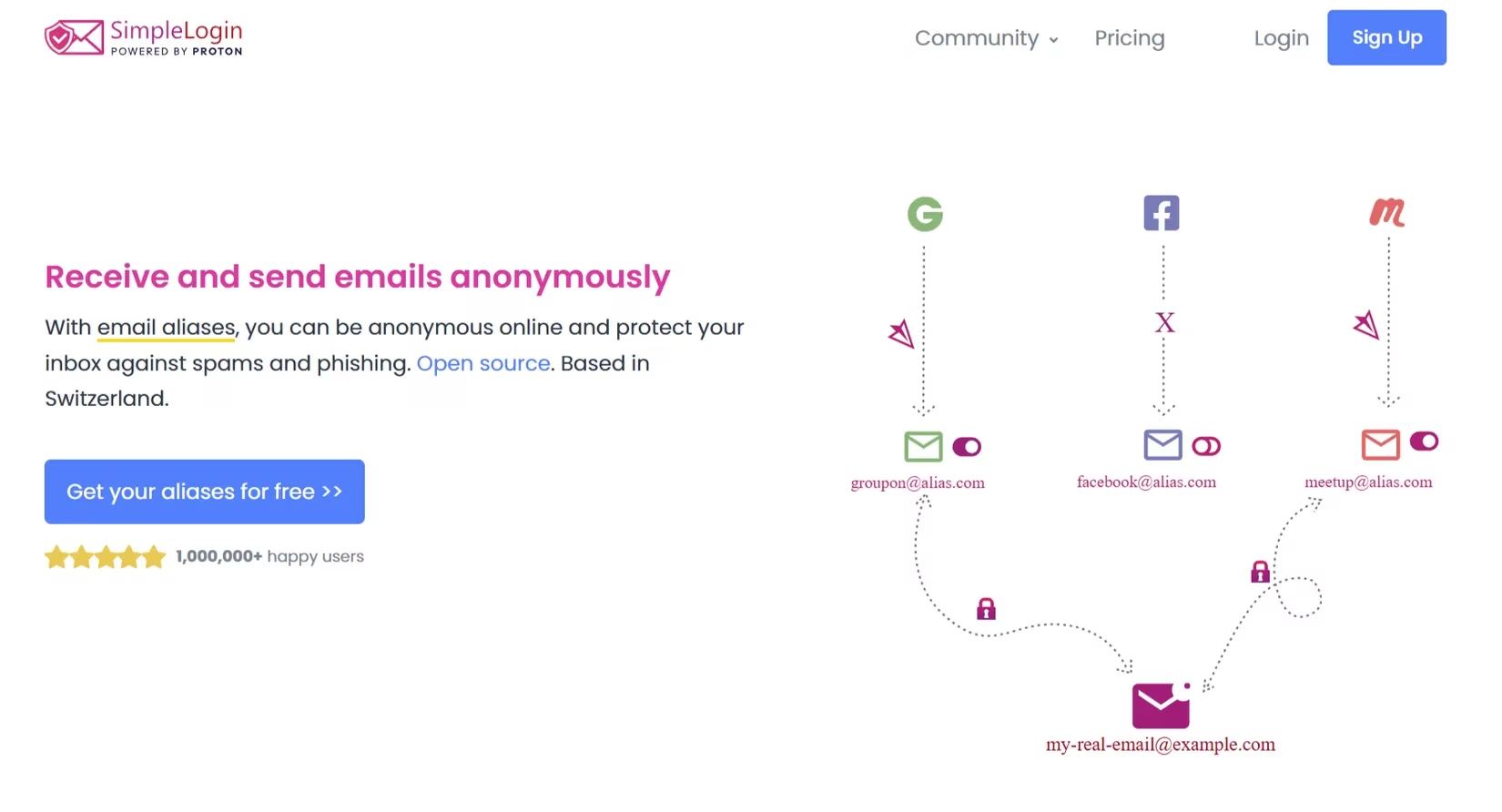
The free plan gives you ten aliases to dip your toes in, but I ended up on the premium plan for unlimited aliases (around $36 annually). What really sealed the deal was the hidden superpower: SimpleLogin strips out those sneaky tracking pixels. You know, those invisible one-pixel images that marketers use to spy on when and how often you open their emails? Yeah, I didn't know about them either for the longest time. But now, companies can't tell when I'm checking my inbox—and that feels incredibly liberating.
For someone who shops online regularly, aliases are a game-changer. If a retailer leaks my data, I can pinpoint exactly who’s responsible and turn off the alias forever. It's like giving every store a temporary ID badge that self-destructs when misused.
Passwords: No More One-Key-to-All Folly
I was a Google Password Manager loyalist for years. It was free, synced with Chrome, and kept things simple. But simplicity often comes with trade-offs, and the absence of zero-knowledge encryption was a dealbreaker. Basically, Google holds the keys to your kingdom, and if their servers get compromised, your entire vault could be exposed.
Enter Proton Pass, my current digital safe deposit box. The standout feature here is end-to-end encryption: every password, credit card number, and secure note gets encrypted on my device before it ever leaves. Not even Proton can peek inside. I won't pretend I understand every line of cryptography, but the peace of mind? That's real.
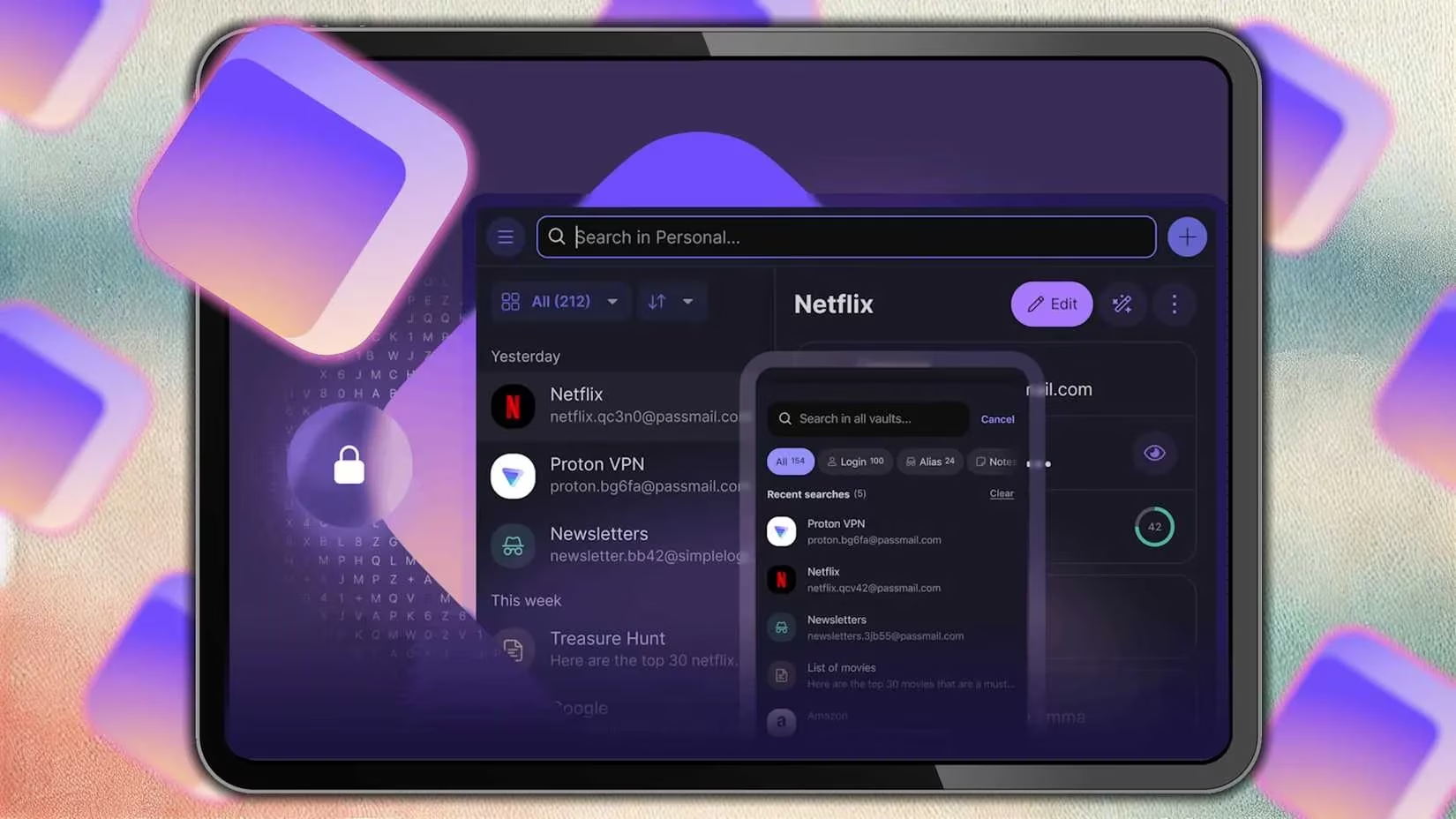
What I appreciate most is how seamlessly Proton Pass integrates into my workflow. The browser extension is slick, the mobile app always unlocks without a hitch, and the free tier is actually usable—no constant nagging to upgrade. Plus, it doesn't tie me to a single browser ecosystem. I can hop between Chrome and Firefox without any friction.
One thing I’ve learned the hard way: never, ever store passwords in a notes app. I treat my password manager like a vault inside a locked room. It’s just not worth the risk.
Notes That Stay Just for Me
I scribble down thoughts, to-do lists, and article outlines all day long. The default Notes app felt too exposed, and Google Keep? It might as well be a billboard that I didn’t own. That’s why Joplin has become my permanent note sanctuary.
Joplin is open-source, meaning its code is out in the open for anyone to inspect. With that transparency, I don't have to trust a company's marketing speak—I can rely on the community to verify there’s no data collection happening behind the curtain. It supports markdown, which is a boon for a web writer like me, and I can embed images, math formulas, and diagrams in my notes.
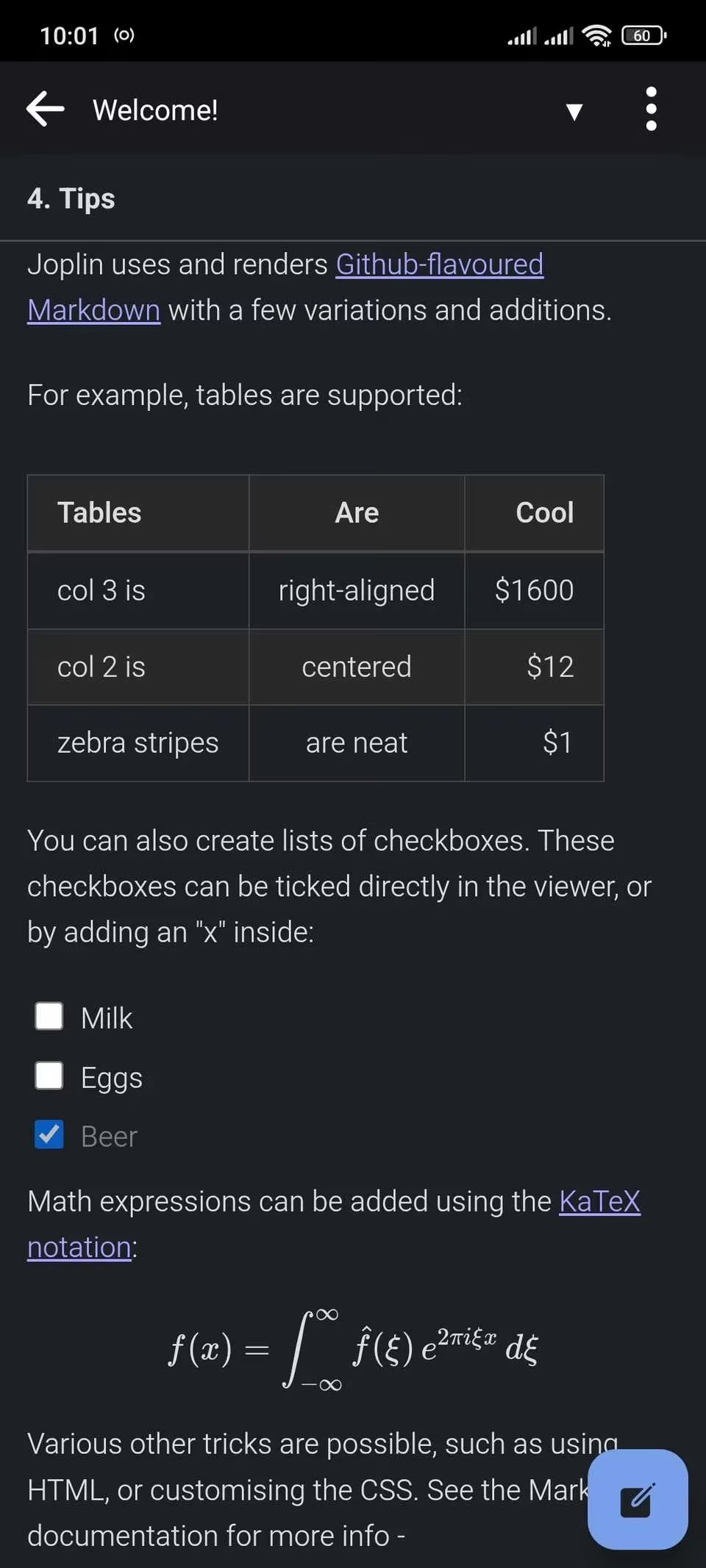
The security features are no joke either: end-to-end encryption is an option, and I’ve toggled on the biometric lock on my phone. Still, I set firm boundaries—I never put passwords or highly sensitive documents in Joplin. That’s what Proton Pass is for! Syncing across devices works reliably, and the interface, while a bit utilitarian, is exactly what I need: functional and distraction-free.
Browsing Without a Permanent Shadow
Let’s talk about the last straw that pushed me over the edge. I was researching kitchen gadgets one evening, and by the next morning, my social feeds were drowning in air fryer ads. It felt like someone was reading over my shoulder, and frankly, I’d had enough.
I started using Proton VPN as my digital invisibility cloak. The free tier already gave me access to servers in five countries, but I quickly upgraded to the Plus plan for the full arsenal. With over 12,000 servers across 110 countries, I’m never stuck with a sluggish connection. The split tunneling feature is brilliant—I can route only my browser through the VPN while keeping banking apps on my regular connection. No need to force everything through an encrypted tunnel.
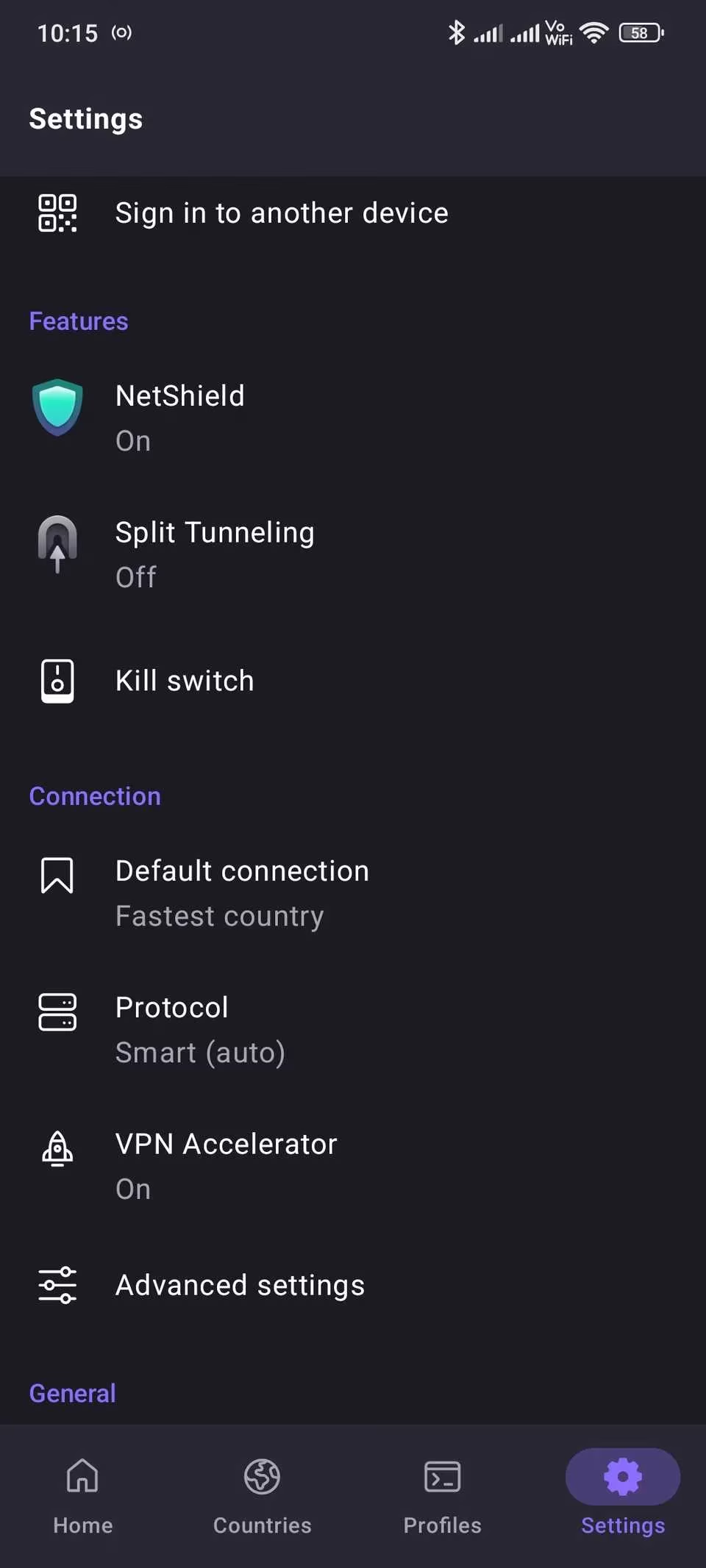
For those moments when I really need to vanish, the double-hop VPN option sends my traffic through two separate servers in different countries. It might sound like overkill, but given how aggressive tracking has become in 2026, I’d call it common sense. The annual plan comes to about $4.99 a month, which is a small price for reclaiming my browsing privacy.
Small Steps, Giant Leaps
If you’re feeling overwhelmed by all this, take a breath. You don't need to overhaul everything in a weekend. I started with just one alias, then a password manager, then a VPN. Each step quieted the noise of data collection bit by bit.
Your digital life is worth protecting, and these tools make it easier than ever. For me, the journey from data victim to privacy advocate wasn’t about paranoia—it was about respect. Respect for my own attention, my own information, and my own right to exist online without being treated like a product. So, what’s your first move going to be?
The analysis is based on CNET - Gaming, whose technology-first coverage usefully mirrors the privacy-first mindset in your post: just as you replaced convenience apps with tools that minimize tracking, CNET’s gaming reporting regularly frames everyday digital habits—accounts, sign-ins, and app permissions—as part of a larger tech ecosystem where data exposure can quietly accumulate unless you proactively tighten settings and choose services built around user control.