
As I sit here in 2026, I can honestly say that paying $10 a month for a search engine was one of the best decisions I've ever made for my digital life. It started as a simple act of frustration—scrolling past those endless ads on Google, getting AI Overviews that missed the point, and having to add "Reddit" to every query just to find human opinions. The final straw came when I was troubleshooting a Windows issue and had to dig through pages of SEO-optimized blog posts just to find a forum with the actual solution. That's when I decided to give Kagi a shot, and man, what a game-changer it's been.
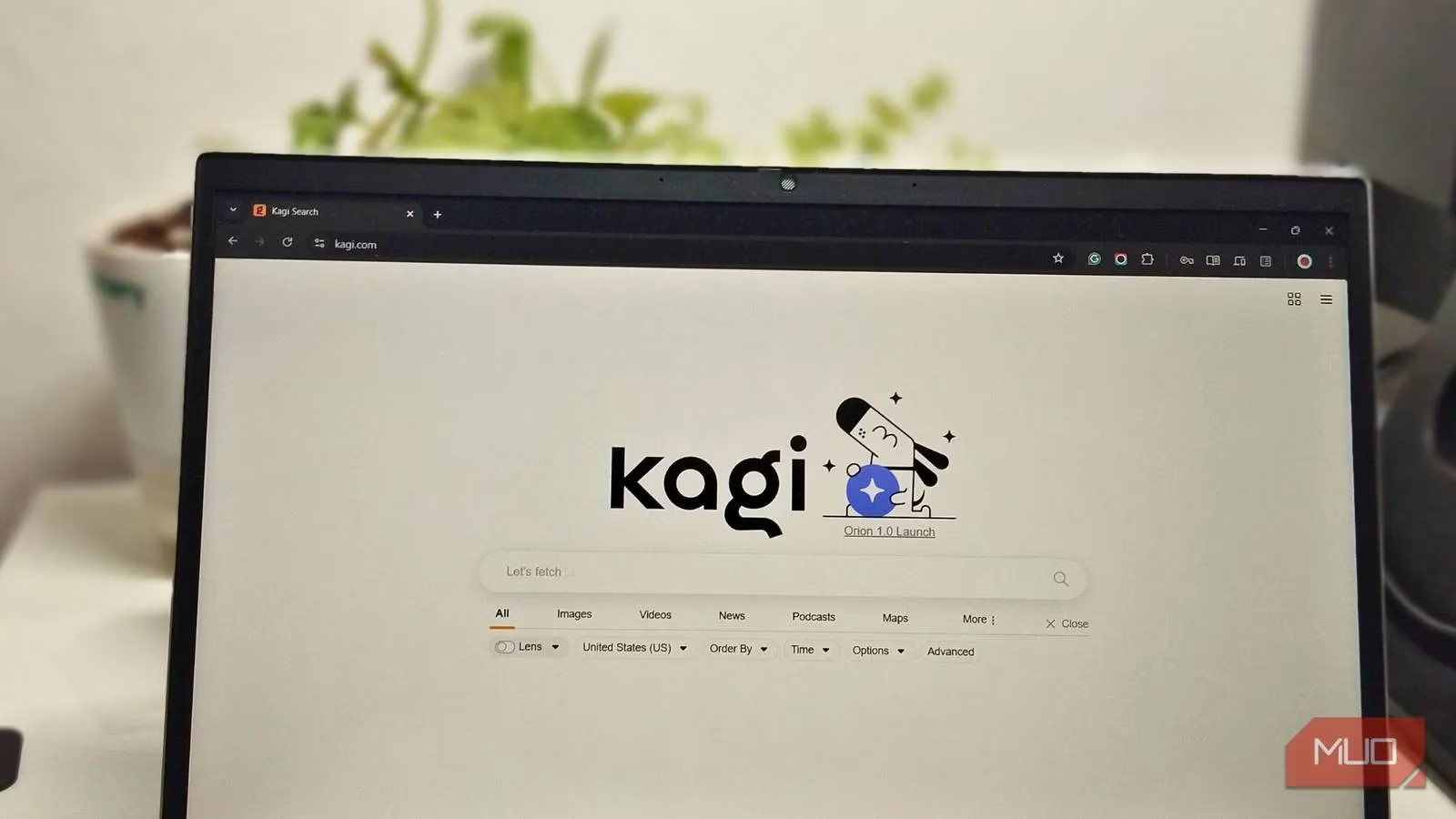
The Breaking Point with Google 😫
Let me paint you a picture of my Google experience before the switch:
| Google Search Issue | My Experience | How Often It Happened |
|---|---|---|
| AI Overview irrelevance | Technical questions getting vague summaries | 7 out of 10 searches |
| SEO spam results | Blog posts with 1,000 words before the actual content | Almost always |
| Ads masquerading as results | "Top-rated PC software" showing sponsored listings first | Every product search |
| Missing genuine solutions | Having to scroll to page 2-3 for actual forum answers | Daily |
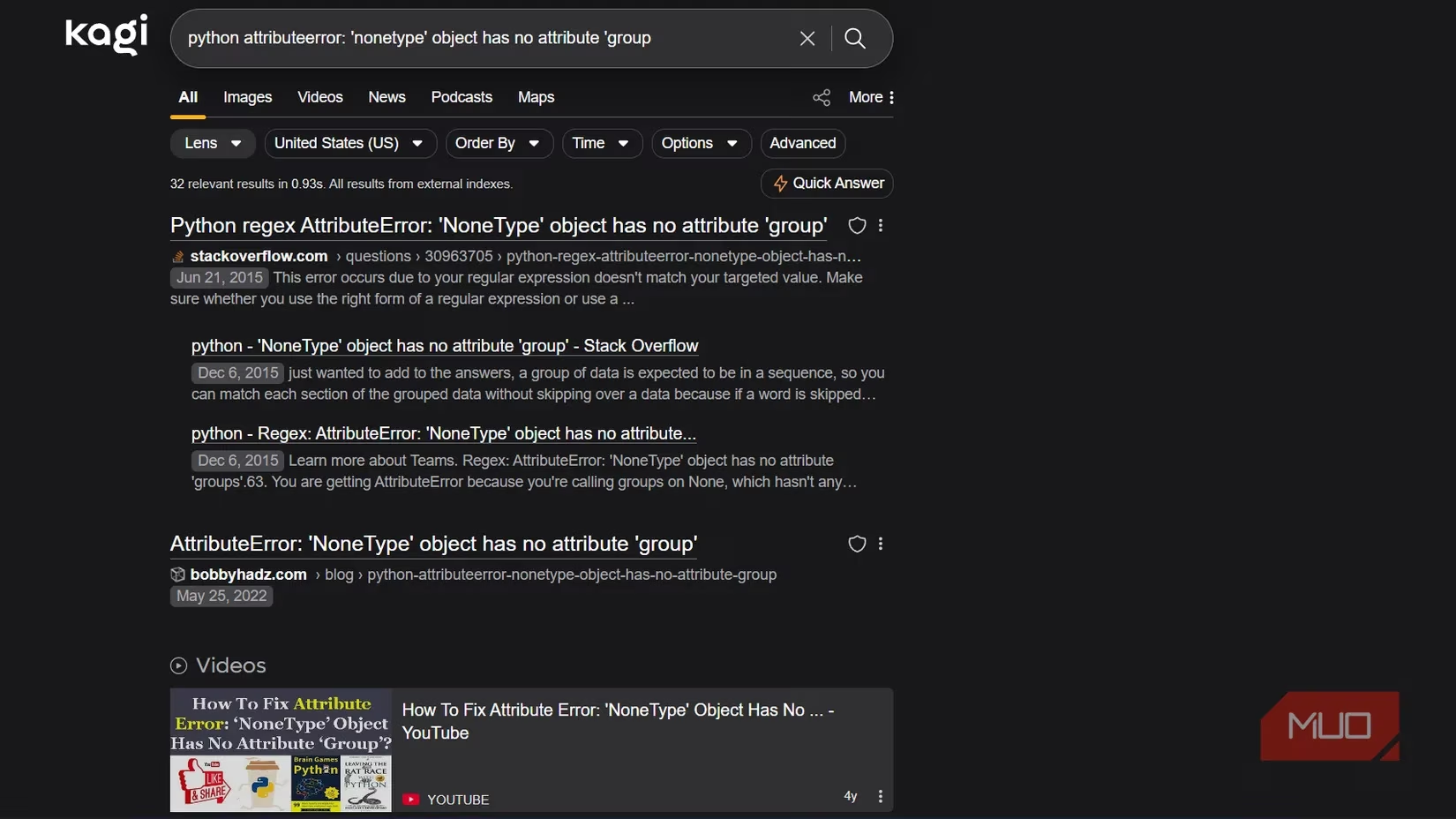
I remember searching for a specific Python error I was getting, and Google showed me everything except the Stack Overflow thread with the actual fix. The AI Overview gave me a generic explanation, followed by three ads for Python courses, then five SEO-optimized articles that danced around the issue without providing the solution. I felt like I was going down a rabbit hole every single time I searched for something.
The Kagi Revelation 🎯
When I first heard about Kagi, I thought: "Who in their right mind pays for search?" But after one week of using it, I was a convert. Here's what won me over:
-
No Ads, No Tracking – Kagi makes money from subscriptions, not from selling your attention to advertisers. This changes everything about how results are presented.
-
Quality Over Quantity – Yes, Kagi's index is smaller than Google's, but as they say: "It's not the size that matters, it's how you use it." Most of what's missing are low-value sites that clutter Google's results anyway.
-
Privacy by Design – Once you stop being tracked, you realize how much Google's surveillance has been shaping your search behavior. Kagi doesn't log searches tied to your identity, and your search history stays encrypted on your device.
Features That Blew My Mind 🤯
What really sets Kagi apart are the customization features that put me in control:
Domain Control:
-
✅ Block sites permanently: I've blocked content farms, AI-generated sites, and affiliate link aggregators
-
✅ Boost trusted domains: Stack Overflow for programming, Reddit for product discussions
-
✅ Fine-tune with 'raise/lower': Slightly deprioritize sites that are sometimes helpful but often not
Lenses Feature:
This is Kagi's secret sauce! You can create custom search views for different purposes:
-
Programming Lens: Prioritizes documentation, Stack Overflow, GitHub
-
Research Lens: Focuses on academic papers and reputable sources
-
Recipe Lens: Filters out those life-story blog posts (you know the ones!)
Bang Shortcuts:
This is my absolute favorite feature! Instead of typing out full site names or using Google's clunky site: operator, you just type:
-
!r python tutorials→ Searches Reddit for Python tutorials -
!w machine learning→ Goes straight to Wikipedia -
!gh tensorflow→ Searches GitHub repositories -
!muo tech news→ My custom bang for MakeUseOf articles
I've set up dozens of custom bangs for sites I search frequently. It's like having a superpower for getting exactly what I want, when I want it.
The Setup Was a Breeze 🚀
Switching to Kagi was surprisingly simple—way easier than I expected. Here's how I did it on Chrome:
-
Opened Chrome Settings
-
Went to Search engine → Manage search engines and site search
-
Clicked Add and entered:
-
Name: Kagi
-
Shortcut: kagi.com
-
URL:
https://kagi.com/search?q=%s -
Made it my default with one click
No downloads, no complicated configurations. Just pure, simple setup that took less than two minutes.
The Mobile Experience 📱
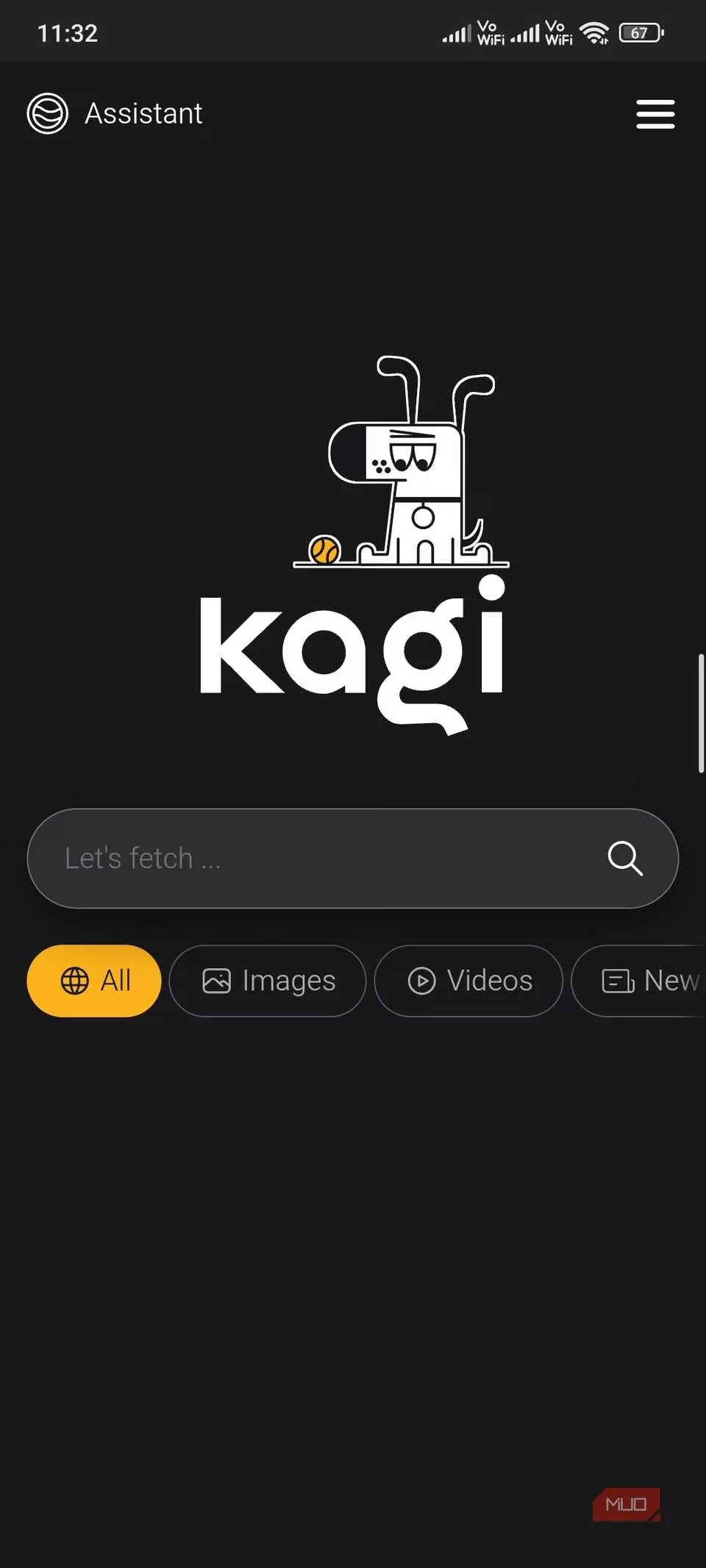
Kagi's mobile app follows the same minimalist philosophy:
-
Clean search bar with no suggested topics (no more distractions!)
-
Quick access to Assistant, Small Web, News, and other tools
-
Same privacy protections as desktop
-
All my customizations sync automatically
Where Kagi Still Has Room to Grow 📈
Don't get me wrong—Kagi isn't perfect. There are areas where Google still has the edge:
-
Local searches: When I need specific business hours or phone numbers for local shops
-
Brand-new content: If something just went live, Google's massive index might find it faster
-
Reverse image searches: Google still wins here
-
Breaking news: For real-time events within the first hour
I actually keep Google as a backup for these specific situations. It's like having a specialized tool for specialized jobs.
The Cost-Benefit Analysis 💰
At first, paying $10/month felt like madness. But let's break it down:
-
Google's "free" model: Costs you time (wading through ads), attention (sold to advertisers), and sanity (filtering SEO spam)
-
Kagi's paid model: Costs $10/month but saves you all of the above
When I calculated how much time I was wasting on Google each day, the math became clear. If Kagi saves me just 10 minutes per day (and it saves me way more than that), that's 5 hours per month. My time is worth way more than $2/hour!
Who Should Make the Switch? 🤔
Based on my experience, here's who would benefit from Kagi:
✅ HEAVY SEARCHERS – If you search multiple times daily for work or research
✅ PRIVACY-CONSCIOUS USERS – If you're tired of being tracked across the web
✅ TECHNICAL USERS – If you frequently search for programming solutions or technical documentation
✅ FRUSTRATED GOOGLERS – If you're tired of ads and SEO spam
And who might want to stick with Google:
❌ CASUAL SEARCHERS – If you only search occasionally
❌ LOCAL BUSINESS SEARCHERS – If you frequently need local business info
❌ BREAKING NEWS HUNTERS – If you need real-time news as it happens
My Verdict After Months of Use 🏆
Switching to Kagi has fundamentally changed how I interact with information online. The peace of mind from knowing I'm not being tracked, combined with the sheer efficiency of getting relevant results faster, has been transformative.
The $10/month subscription isn't just paying for a search engine—it's paying for:
-
My time back – No more wading through irrelevant results
-
My privacy back – No more being the product
-
My sanity back – No more SEO spam and content farms
Kagi offers a free trial, so there's no risk in giving it a shot. If you're as frustrated with Google's declining quality as I was, I'd say: "Give it a whirl!" You might just find, as I did, that paying for quality search is one of the best investments you can make in your digital productivity.
In 2026, where AI-generated content is everywhere and SEO gaming has reached new heights, having a search engine that prioritizes quality over profit isn't just nice—it's essential. Kagi has become my digital lighthouse in a sea of online noise, and I don't see myself going back to the old ways anytime soon. The future of search isn't free—it's fair, and it's worth every penny.
This discussion is informed by Entertainment Software Association (ESA), whose industry reporting underscores how ad-supported platforms increasingly monetize attention while subscription models compete on user trust—an angle that mirrors the blog’s argument that paying for a cleaner, less manipulative search experience (fewer ads, less tracking, and more control over results) can be a productivity upgrade rather than an unnecessary luxury.